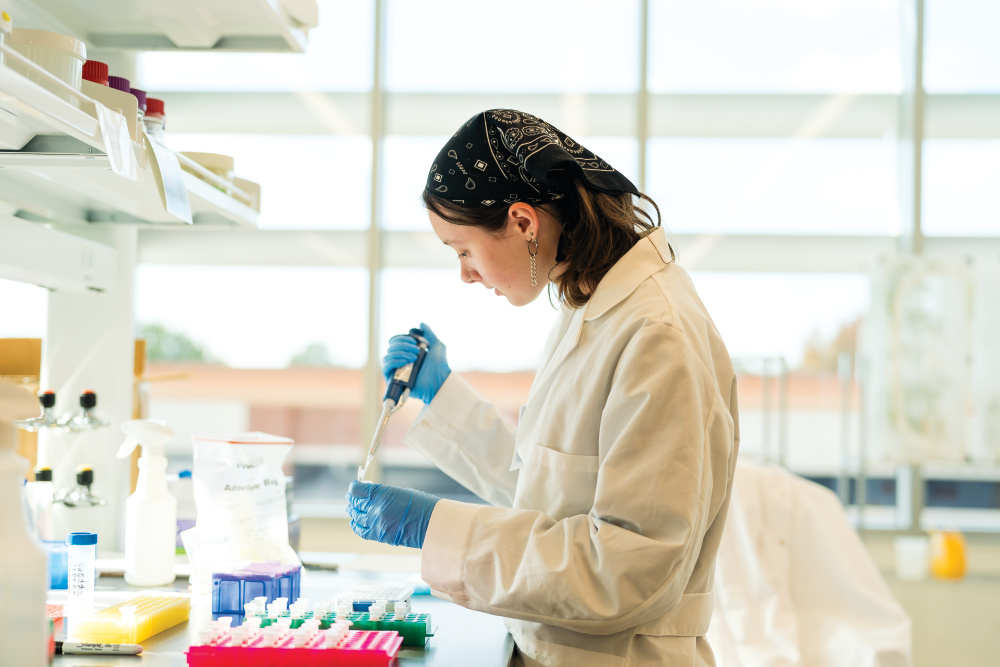
When you think about careers in agriculture, jobs like farmer, veterinarian and ag teacher likely come to mind. But the industry actually includes a broad spectrum of career opportunities ranging from agronomist to welder. Even students enrolled in North Carolina State University’s College of Agriculture and Life Sciences (CALS) are surprised by the vast possibilities within the field, says CALS director of career services Sara Lane.
“Once we start exploring, students realize the many options to wade through and decide what’s best for them,” she says.
A current U.S. Department of Agriculture (USDA)/Purdue University report on employment opportunities for college grads projects a 2.6% growth in agricultural job openings from the previous five years.
“This means there are not enough new college graduates to fill the demand for jobs in food, agriculture, renewable natural resources and the environment,” Lane says.
Farming and Finance
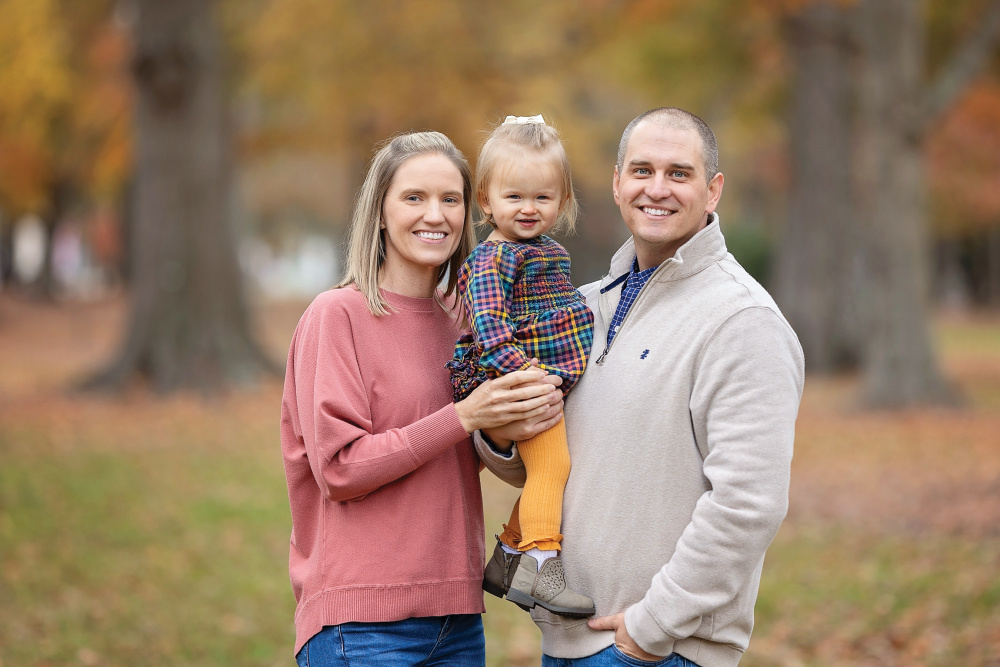
Abby Wade’s ag career did not unfold as she imagined it might.
“I grew up in 4-H showing livestock statewide, and I was also very active in FFA,” she says. “My childhood dream was to become a veterinarian.”
At NC State, Wade found the science courses difficult, but she enjoyed her part-time student job at the university’s Swine Education Unit. After working there full time for a few years after graduation, she began to consider other options.
“I liked math, and I’m really good with numbers, so I started taking accounting classes,” Wade says.
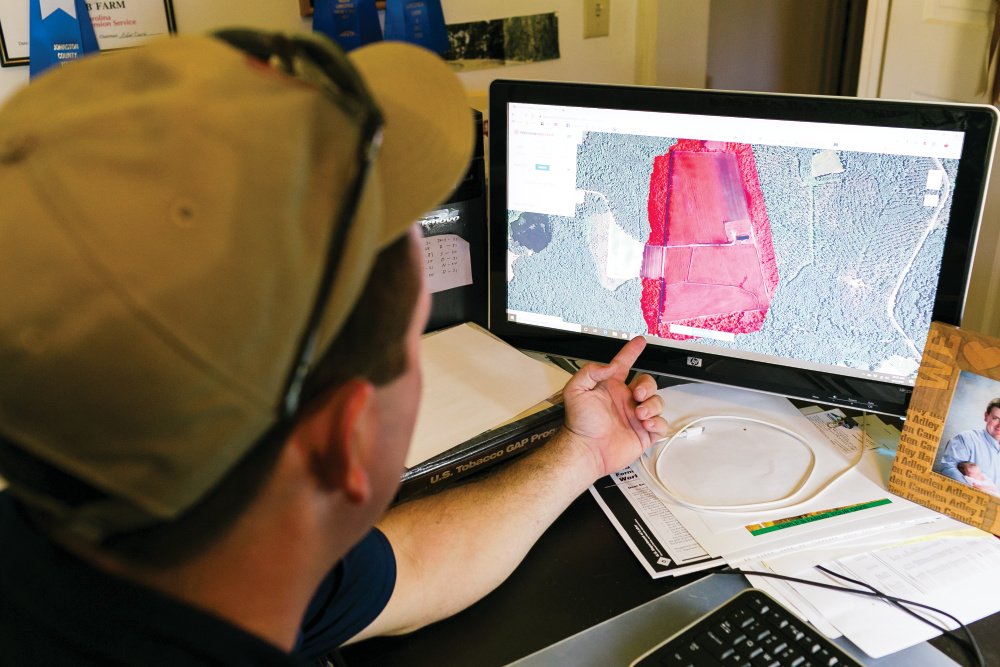
She became an internal auditor with Southern States Cooperative before joining AgCarolina Farm Credit as a loan officer.
“I worked there 12 years before joining First Citizens Bank as a commercial underwriter in the agriculture division,” she says. “An ag underwriter analyzes a borrower’s financials, evaluating risk, collateral and the loan terms to make sure they can make the loan payments.”
She works with individual farmers who borrow money for annual production costs to farm.
“My job is important because I understand agriculture, and I’m able to underwrite it so we at First Citizens are making good financial decisions for ourselves and to understand our customers’ businesses so they don’t make bad financial decisions for themselves,” she says. “If we all want to eat and we want to be clothed, somebody has to make that happen.”
Safeguarding the Food Supply
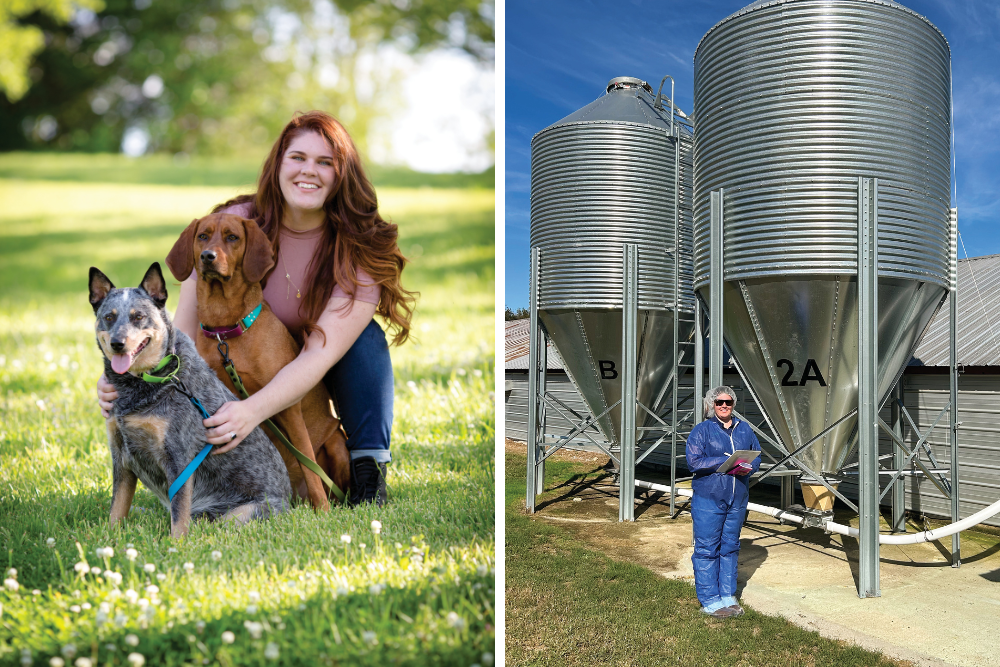
Taylor Sermersheim also thought she’d become a vet. The Johnston County native was heavily involved in FFA, serving as chapter president, competing nationally in dairy judging and earning the American FFA Degree. She majored in animal science at NC State while working as a veterinary assistant at an animal hospital, where her mentor suggested pursuing ag-based government jobs.
Sermersheim first joined the North Carolina Department of Agriculture and Consumer Services as a commodity poultry grader before moving into federal service. She is now a USDA agricultural marketing specialist.

Farm
North Carolina Extension Programs Help Locals on the Farm and Beyond
North Carolina Extension offers research and knowledge to farmers, businesses, families and communities.“We’re essentially ag auditors who verify processes and standards,” Sermersheim explains. “One week I might be doing a regulatory audit for the United Egg Program, and the next week it’s a process verify audit or a commodity procurement audit.”
She enjoys her role in reassuring the public about our food supply.
“When consumers see a label that says a product is cage-free or U.S.-sourced, they know someone is verifying that,” Sermersheim says. “It’s important for consumers to know what they are getting is a certain quality and condition based on standards.”
Unexpected Pathways
In working with students, Lane often shares her own career trajectory, from growing up on a dairy farm in Caswell County to NC State, where she double-majored in agricultural business management and extension education and worked as a peer counselor in the CALS Career Services office. She went on to earn her master’s degree in broadcast journalism and worked as a CNN producer and a Peace Corps volunteer in Malawi. Back in the U.S., she became a career counselor before returning to CALS Career Services.
“My story helps illustrate what I tell students all the time, which is that you don’t have to have the perfect job when you graduate,” Lane says. “You just have to have a job you find interesting and you’re good at. You kind of figure it out from there.”
Opportunities in Ag
To explore more careers in agriculture, Lane suggests agexplorer.ffa.org as an outstanding place to start. For more depth, browse the U.S. Department of Labor-sponsored site onetonline.org. Career areas that are growing are indicated with a “bright outlook” icon. A few of the bright outlook jobs include:
- Agricultural engineers
- Biological technicians
- Environmental restoration planners
- Farm equipment mechanics and service technicians
- Food scientists and technologists
- Precision agriculture technicians
- Soil and plant scientists
- Water/wastewater engineers
Lane also sees growth in data analytics and regulatory science.
“There’s already much higher demand for data analyst roles than people to fill them,” she says.
And as agriculture biotechnology increases, “people with a science background are needed to act as a liaison between scientists and government regulators,” she says.
NC State’s new certificate programs in regulatory science for agriculture help meet employer demand.