Everyone wants to move to North Carolina, and it shows – about 165,000 people move to the state each year, which is the fourth-largest population gain in the nation, according to the Office of State Budget and Management. While new neighbors, business and economic boosts are great, new residents need homes, schools and jobs, which require land. Unfortunately, the prime spot for the picking is the state’s farmland. According to the American Farmland Trust, North Carolina is projected to lose more than 1 million acres of farmland by 2040.
However, not all hope is lost with NC FarmLink’s help. Read on to meet two farmers who have expanded their farms with the help of this NC State Extension program.
NCFB News
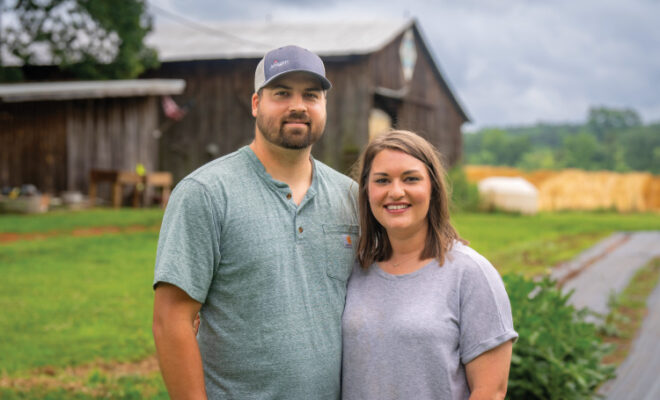
Adam and Carrie Barnhardt are the 2023 Achievement Award Winners
Adam and Carrie Barnhardt of Rowan County are the winners of the 2023 NCFB Young Farmers & Ranchers (YF&R) Achievement Award.Farmland Skips a Generation
Carrie Barnhardt always knew she wanted her children to grow up on a farm, as she did on her grandfather’s farm. When the estate became available in 2017, she and her husband, Adam, felt it was the perfect opportunity to begin investing in their dream.
“My grandfather was always passionate about someone farming the land one day,” Carrie says. “I just don’t think he ever thought it would be his granddaughter.”

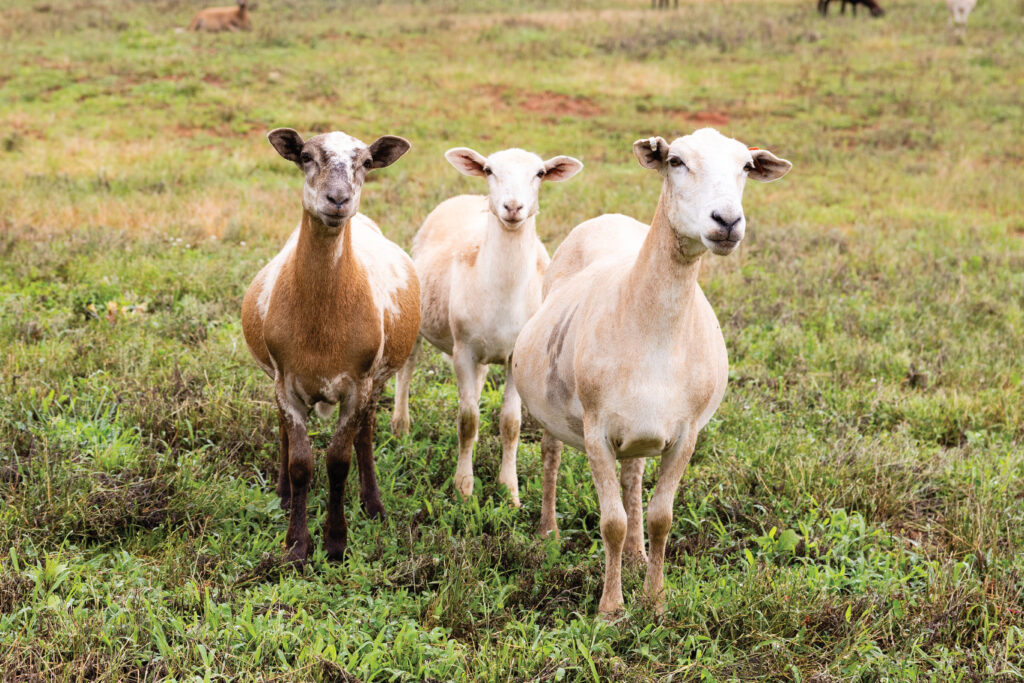
The Barnhardts bought 45 acres from her grandfather’s estate and established Barnhardt Farms of Rowan County, which is a thriving poultry and sheep operation today. Adam manages the flocks, while Carrie handles the finances, grows cut flowers, designs eye-catching arrangements and pitches in where needed.
“It’s a passionate job,” Adam says. “It’s something that’s a lot of hard work, a lot of hours and you don’t get sick days. You have to love it to be in it. But it’s so rewarding at the end of the day.”

Commentary
Farmland Loss Is an Important Topic for All Farmers
Farmland loss affects everyone who appreciates our safe, abundant, local food supply and who cares about our state’s economy.As first-generation farmers building something from scratch, expanding beyond their original acreage has been challenging. When the family needed more pasture space to expand their sheep business, they signed up with NC FarmLink, a statewide initiative supported by NC State Extension that helps older farmers find successors and younger farmers acquire land.
“NC FarmLink bridges the gap between people who want to keep their land in agriculture and those who need land to grow,” Adam says.
Connections the Barnhardts made through NC FarmLink eventually led to a partnership with a neighboring hay farmer who had an old goat dairy he no longer needed.
“Even though we didn’t make a direct connection through NC FarmLink, sharing our story helped us start conversations,” Carrie says. “It gave us the confidence to approach other landowners.”
Return to the Family Farm
Porter Farms spans 1,200 acres in Mount Pleasant. In the 1990s, owners Tommy and Vicky Porter settled on its first 200 acres to raise their family. Over time, both the farm and family grew. Two sons and a daughter eventually left to pursue other interests, but they returned one by one, each bringing a spouse.
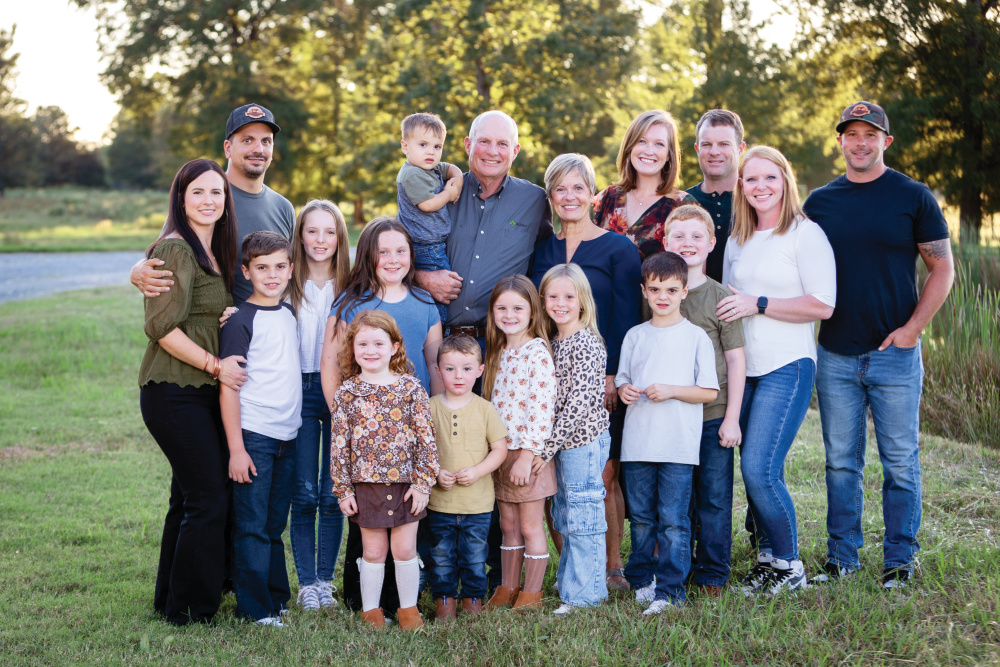
conservation easement to ensure it is protected for the future generations of the family. Photo credit: Cassie Leigh Photography
Today, the entire family runs an expansive operation raising hogs, poultry and a cow-calf herd. They’ve also added two wedding venues and a farm store.
“It’s an unusual situation,” Vicky Porter says. “Not too many families exist with everybody working on the farm. We’ve had to innovate. We’ve revamped and figured out ways we can all be productive on the farm.”

Commentary
Ag Research Helps N.C. Farmers Feed More People on Less Land
N.C. farmers and agriculture contribute $103.2 billion to our state’s economy, and we celebrate the hard work it took to get here.One of the things the Porters are most passionate about is land development in North Carolina. They’ve been intentional about preserving what they own. “We’ve put most of the farm into permanent conservation easements,” Porter explains. An easement is a legal agreement that preserves the land by preventing development and setting conservation practices.
The family sought state and federal funding for putting those easements in place. They’ve used payments for development rights to buy additional farmland, taking advantage of tax rules that let you swap one property for another and delay the taxes until later.
“That’s how we’ve grown this farm from the size it was in the ’80s to what it is today,” she adds.
They still have constant pressure from developers, but the Porters feel confident knowing they’ve protected the land for farming, and for the next generation.
Talking Transition with NC FarmLink
NC FarmLink helps families with transitions like these, and Porter attended one of their seminars.
“We’d done a lot of transition planning, but I was still struggling with having the conversation with my children,” she says. “Now, each of my kids has a handbook with questions about where they see themselves in 10 years, where they see the farm and their role. The seminar provided a ton of information.”
Farm
John Burt Advocates for Land Preservation
Over the past 20 years, Wake County in Central North Carolina has grown and evolved tremendously. But for farmer John Burt, at least one thing has stayed the same.NC FarmLink provides practical help, from free farm succession consultations to more in-depth family succession planning in partnership with the NC Ag Mediation Planning Program. They also maintain a database where young farmers can connect with older farmers needing a successor, and the need for a program like NC FarmLink is urgent.
“About 40% of our farmers are over the age of 65, and transitions are pretty vulnerable times for farms,” says Stephen Bishop, western director of NC FarmLink.
It’s never too early to start planning. “There are basically two worst-case scenarios with farm transitions,” Bishop says. “The first one is losing the farm. The second one is losing the family.”
He’s doing everything he can to help families preserve both.
Even as development threatens the state’s farmland, Bishop sees a silver lining in opportunities for young farmers.
“They can get into direct-to-consumer markets,” he says. “The local food movement is growing in North Carolina, too. We’re still a huge agricultural state, and we still have a ton of industries tied to farming here, so that’s something to be proud of.”
To learn more about NC FarmLink and start these critical conversations on your farm, visit your local NC Extension office or contact the NC FarmLink Office at 704-482-4365. To read more succession success stories with the help of NC FarmLink, visit ncfarmlink.ces.ncsu.edu.
If you go…
Barnhardt Farms
Location: Mooresville
Phone: 704-433-7788
facebook.com/bfofrc
Porter Farms Store
Location: 4455 Mount Pleasant Road S., Concord
Phone: 704-785-6198
Hours: Open 11 a.m. to 2 p.m. on Thursdays and Saturdays; 4-6 p.m. on Fridays
porterfarmsnc.com