North Carolina high school students can now learn the essentials of forestry management and related careers through a new course aimed at getting more youth interested in these fields.
Forestry is the top manufacturing sector in the state, contributing more than $40.5 billion to the economy and supporting more than 143,600 full-time and part-time jobs with a payroll of about $9.8 billion, according to NC State Extension.
The North Carolina Forestry Association (NCFA) and North Carolina FFA partnered to create Natural Resources II-Forestry, the state’s first high school forestry class offering an industry-aligned credential. The Certified Forest Worker credential is available through ForestryWorks®, a national program focused on developing a pipeline of qualified workers for the nation’s forestry and forest products manufacturing industries.

Commentary
A Stabilizing Force for North Carolina
Logging On
Eight schools added the course to their curriculum in its pilot run during the 2024-2025 school year. Jessica Ireland, director of education programs for NCFA, says she expects that number to increase in future years.
“There’s a strong need to train the next generation of professionals to fill the wide range of career opportunities that we have,” Ireland says, explaining that a surge in retirees paired with a small percentage of 18- to 24-year-olds entering the workforce has contributed to an industry gap.
“We’re trying to make sure that we’re getting out in front of youth in our state and that they’re aware of all the opportunities,” Ireland adds.
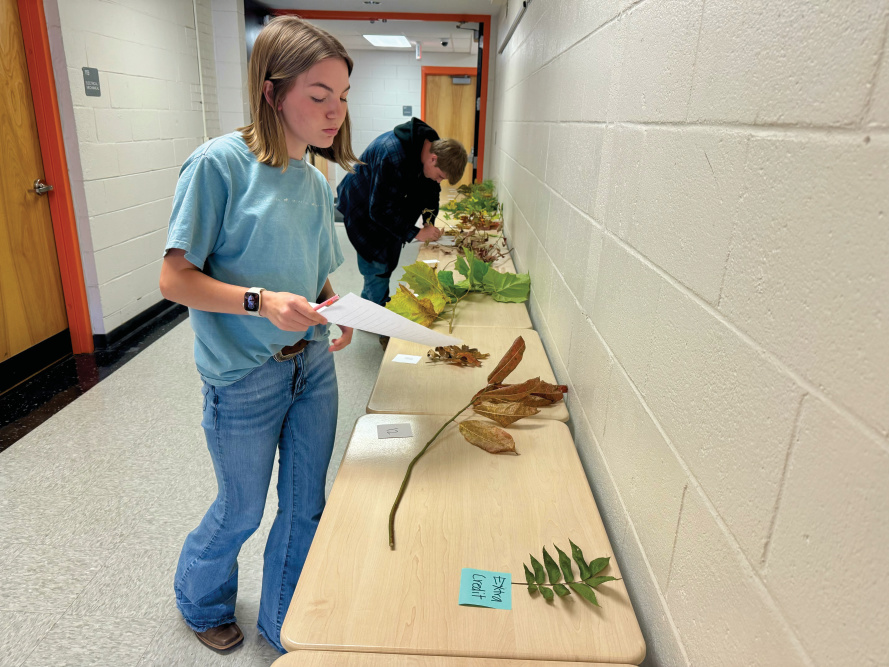
Once completed, the course can jump-start a forestry career. For instance, NCFA is pursuing an agreement with the state’s community college system that would let students count their high school course as their entry-level forestry course. Several North Carolina community colleges and universities offer forestry-related programs, but not all forestry jobs require postsecondary education.
“There are a lot of opportunities to enter into a career directly out of high school with some additional technical training or on-the-job training,” Ireland says.
She says North Carolina FFA’s support in designing the course was “invaluable” and adds that a grant from the U.S. Forest Service (USFS) was essential in bringing it to life.
Logging and Learning
For forestry students at Onslow County Learning Center in Hubert, where the course was introduced in the spring 2025 semester, their classroom is unique.
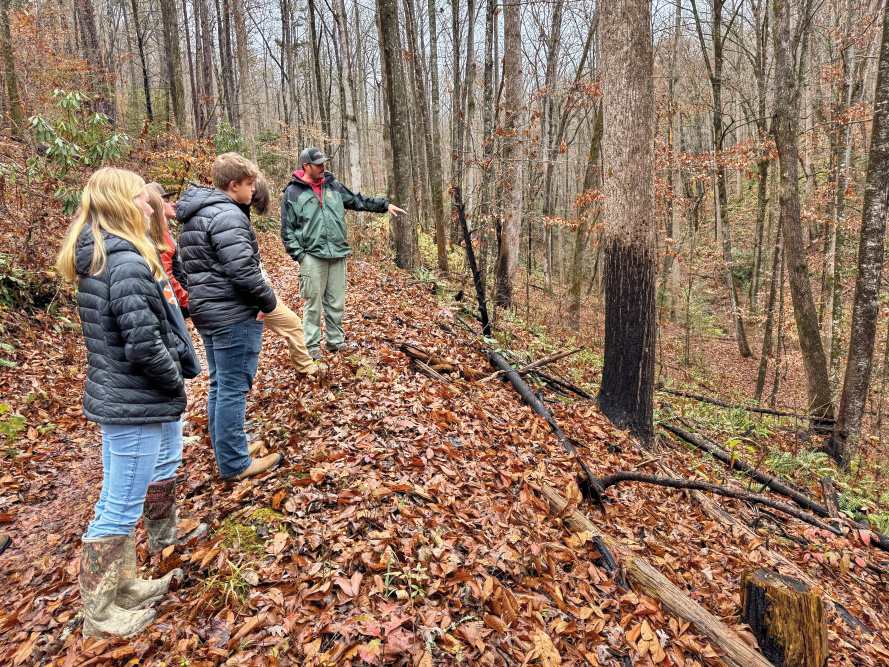
“My school is surrounded by a 70-acre forest of different habitat types and forest types,” says Greg Gaudreau, the technical education instructor who teaches the course.
“It allows me to take my students into the forest. And I can teach them in real time hands-on topics such as tree identification or the history of forestry in North Carolina.”
Students are also introduced to tools like chronometers to calculate merchantable height, which is the length of the trunk that can be used to produce a product, or Biltmore sticks to measure tree volume. (The Biltmore’s chief forester developed the forestry tool – one of the first examples of forestry applied as a science – more than 100 years ago.) Students even go to a “chainsaw academy” so they can harvest trees of their own. These trees are sold, and many of the profits funnel back into the program.

“It’s sometimes easier for them to wrap their heads around concepts when they’re looking at it in person versus someone just explaining it to them in just a regular classroom setting,” Gaudreau explains of this hands-on approach.
Onslow County Learning Center, geared for at-risk students, enrolled four pupils in the forestry course during its first semester.
“I’ve had a lot of positive feedback from my students,” Gaudreau says. “Some of my struggling students, I’ve heard them straight out say, ‘The only reason why I come to school is to come to Mr. G’s class.’”
Going Out on a Limb
Mason Bell took the forestry course during its inaugural semester in fall 2024 at Rosman High School in Transylvania County.
“It provided valuable knowledge and hands-on experiences,” says Bell, a high school junior.
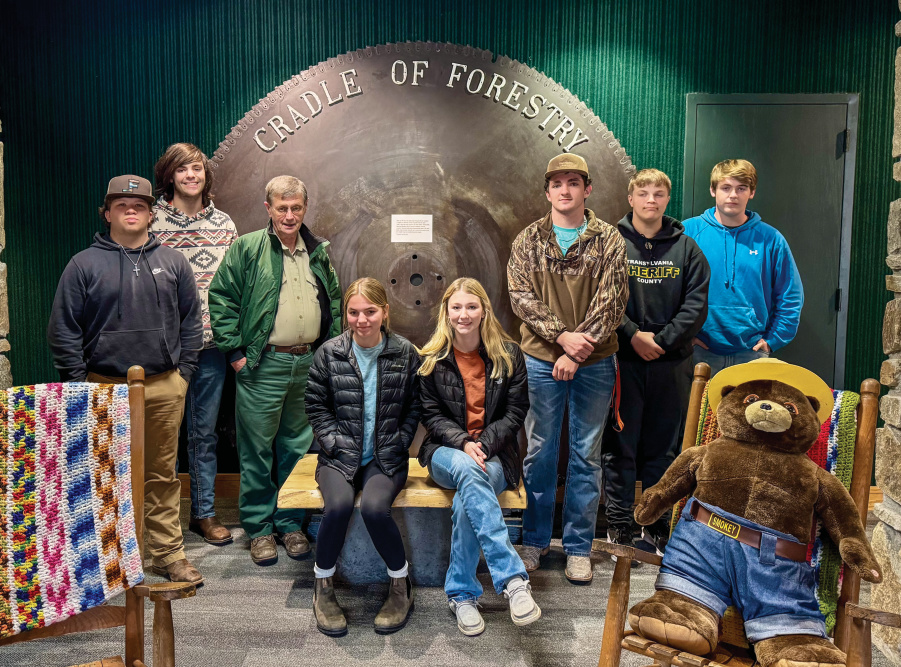
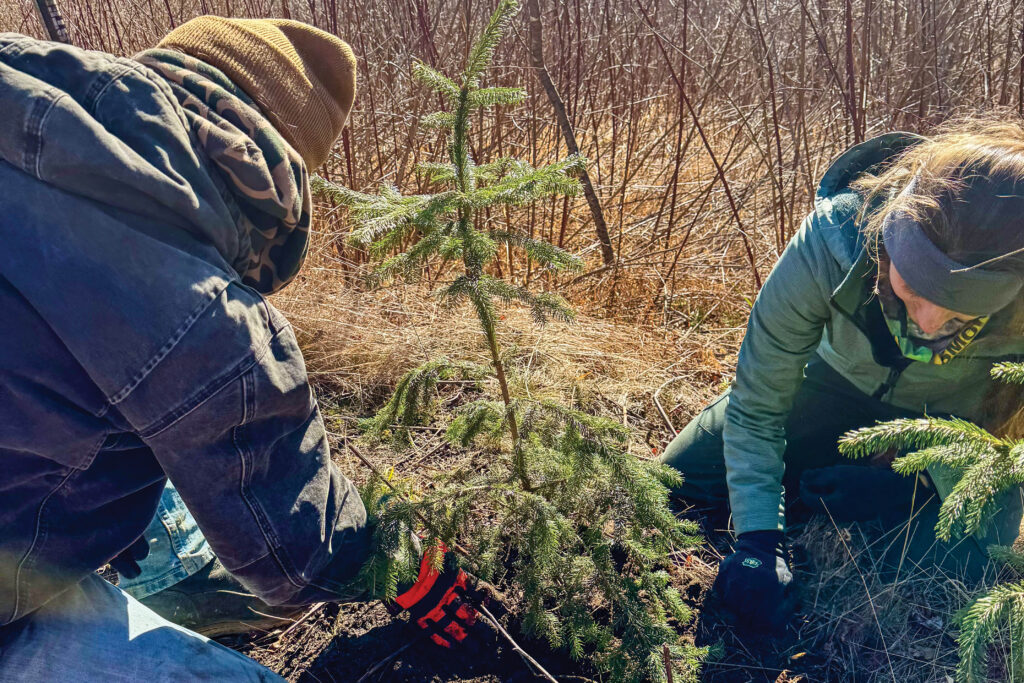
The class took a trip to the Cradle of Forestry in America, a 6,500-acre site near Brevard, which commemorates the beginning of forest conservation in the U.S. They also visited a sawmill and planted some red spruce trees off the Blue Ridge Parkway, an experience that Bell called especially memorable. They also met with representatives working for agencies like USFS and the North Carolina Forest Service.
“I had the opportunity to learn about different aspects of forestry, such as planting trees and exploring areas focused on tree restoration,” Bell says. “Additionally, I appreciated learning about forestry programs and their significance for farmers and landowners. Overall, I really think this new class is a great asset to our school and community.”
For Bell’s teacher, Heather McNeely, the forestry class is a win-win for everyone.
“From a teacher’s perspective, anything we can do to offer the kids a credential is enticing,” McNeely says. “They’re not just getting a grade, they are getting something that they can keep for the rest of their life and use to further their education.”
She adds that the course is a valuable public outreach tool about healthy forest management.
“Even if it’s nine kids at a time, educating the general public about what a healthy forest looks like is something that I think is important,” McNeely says. “Educating these kids so that they tell their family and friends what makes a healthy forest is one of my goals.”
To learn more about the course, contact Jessica Ireland at jireland@ncforestry.org or go to ncforestry.org.