
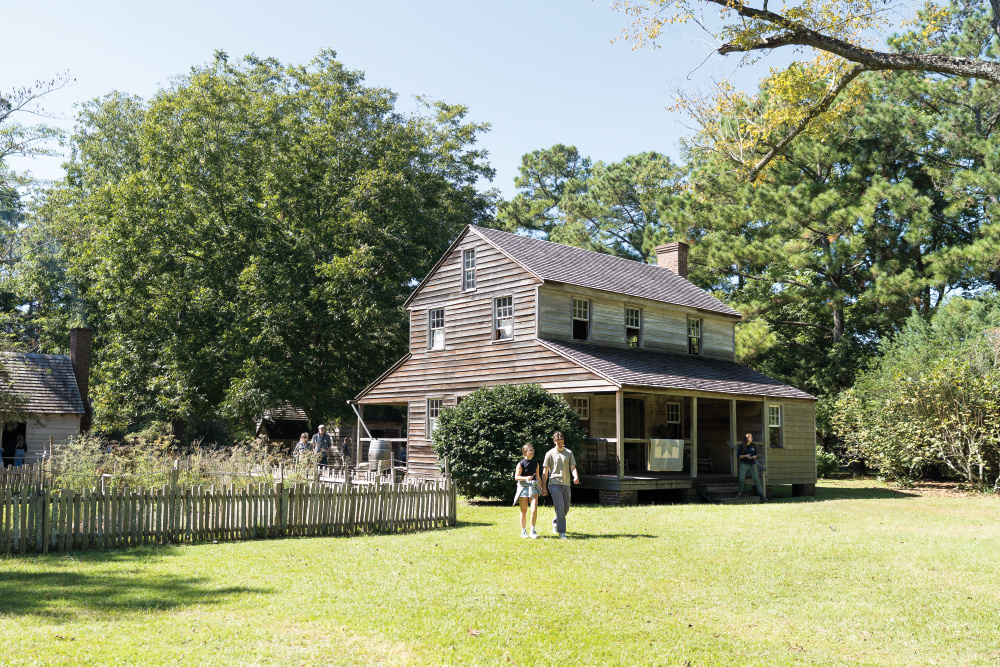
In North Carolina, history is woven into the land, buildings and traditions that have shaped rural life for generations. Today, dedicated individuals are working to preserve it in historic sites like Island Farm and Red Oak Farm-Life School.
Island Farm on Roanoke Island
At Island Farm on Roanoke Island, visitors can step back to the 1850s and see the past come to life.
“We’re a hands-on living history farm,” says site manager Terri Meeks, in her ninth season with the farm. “We’re a real working farm and allow almost complete access to everything we have. We don’t fuss at kids for touching things.”
Now, in its 16th season, Island Farm shares the story of the Etheridge family, who settled on the land in 1757. The restored farmhouse, built around 1847, is a testament to coastal North Carolina’s agricultural roots. And it isn’t a typical museum. Guests are encouraged to explore freely – open drawers, play checkers in the parlor or sample food prepared over an open hearth.
“We’re living the history,” Meeks explains. “We try things and do things the way they would have. We have about an acre of gardens planted with heirloom varieties. We’re expanding our heritage livestock breeds. We cook from produce our garden manager is growing and get recipes from period books. We like to involve all the senses, including emotions.”
Engagement Encouraged
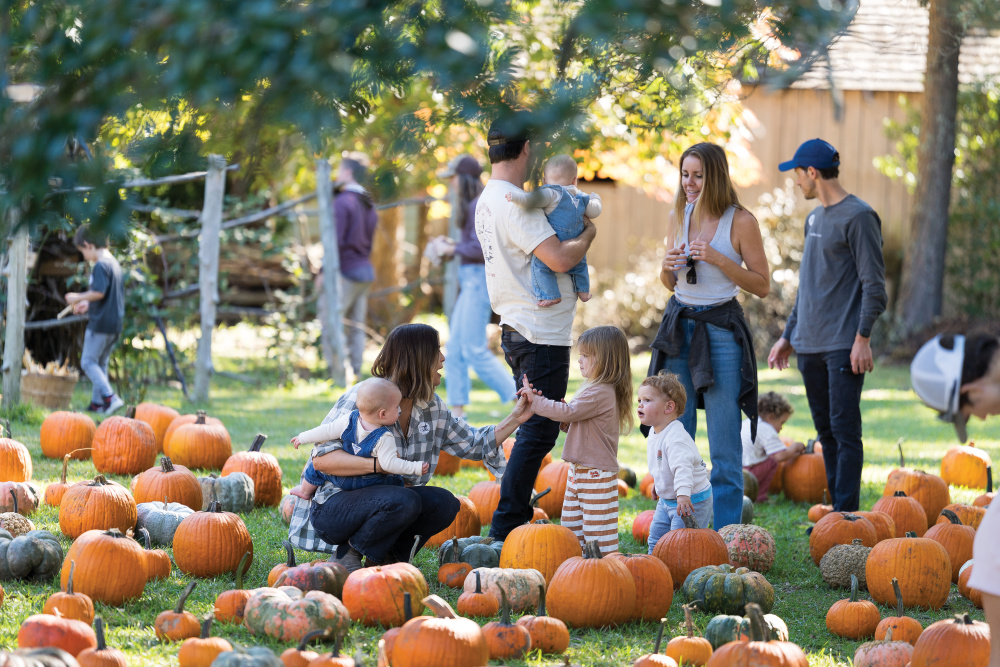
To make sensory connections, Island Farm offers interactive events like sheep shearing, traditional crafting and events like “Tater Day,” when visitors dig potatoes from the field and watch them be transformed into fresh-made chips over a fire.
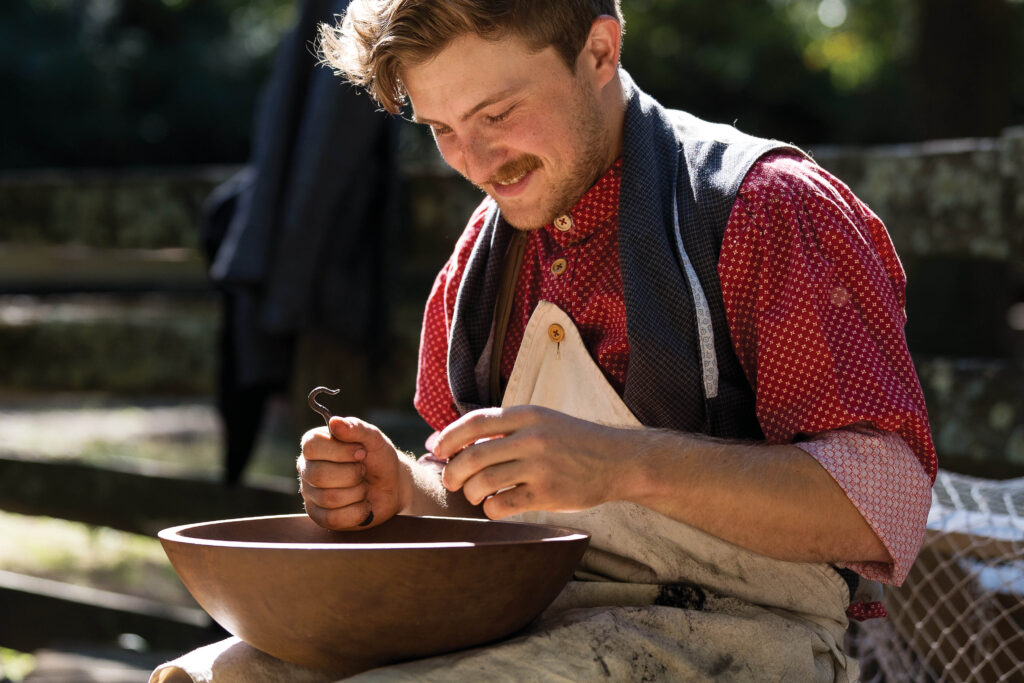
“We try to incorporate interaction from the beginning to the end,” Meeks says. “Just like on sheep shearing days – shearing the sheep, washing, carding, spinning, weaving and dyeing are all processes visitors can participate in.”
While many visitors come to the Outer Banks for stories of the Lost Colony or the Wright brothers, Meeks emphasizes that Island Farm offers the rich history of daily life.
“We’re the only place on the Outer Banks that focuses on agriculture,” she says. “This area started with farmers and fishermen, and that’s the story we tell.”

Attractions
Surf’s Up on North Carolina’s Outer Banks
Island Farm is protected under a permanent conservation easement through the North Carolina Coastal Land Trust and is in the process of being listed on the National Register of Historic Places.
“When you’re at the farm, it should look like it did in the 1850s, as much as we have control over that,” Meeks says. “We hope when people leave that they’ve learned something, and feel like they’ve visited family.”

Red Oak Farm-Life School in Nash County
While Island Farm preserves rural life through immersive living history experiences, another effort to safeguard rural history is underway further inland. In a small town in rural Nash County, the Red Oak Area Historic Preservation Society strives to save the only surviving structure of the century-old Red Oak Farm-Life School.
“We’re trying to save this last building that was used when it was a boarding school,” says 98-year-old Agnes Moore, who grew up in Red Oak and later returned to live in her grandparents’ house. “I think it’s one of the great opportunities that people have had to be able to attend Red Oak School.”
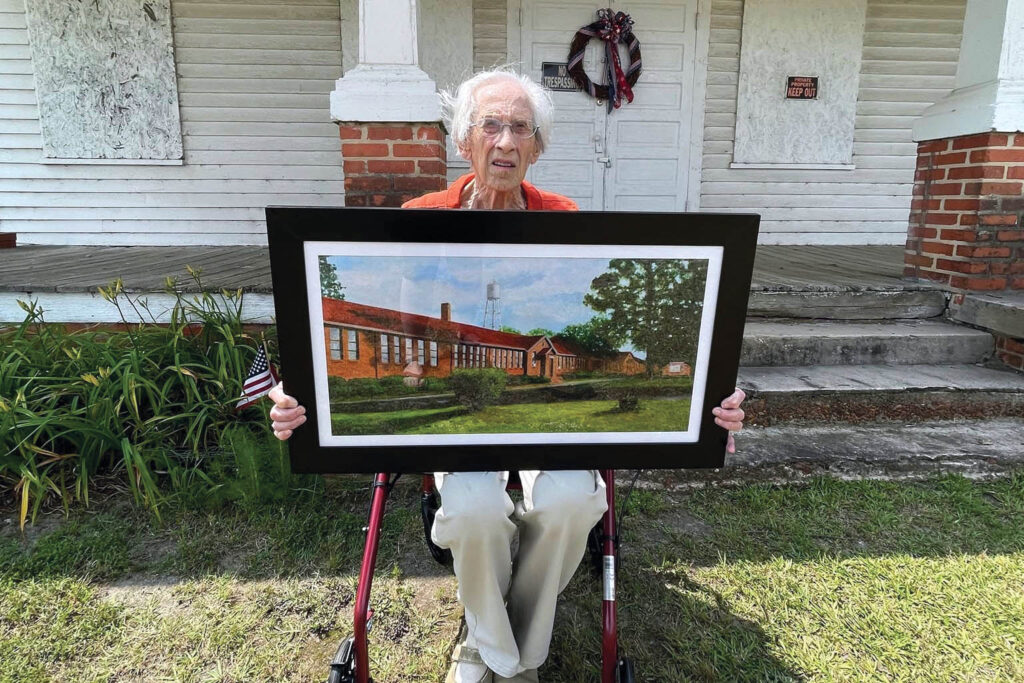
Established in the early 1900s, it was the second farm-life school funded by the state in North Carolina. Boarding options allowed students from across the state to attend, and many came from rural areas where education was almost nonexistent. Their studies blended practical skills with traditional learning, and they gained hands-on experience managing crops, repairing equipment and working on a 30-acre farm with its own cannery.
Preserving the Past
“I remember that well, and that was such a great thing for the farm families,” Moore says. “They could bring their produce in and have it canned. I remember people would have a lot of food to carry home to hold them through the winter.”

For many students, including those in Moore’s family, Red Oak School opened doors to higher education and careers.
“My mother came to boarding school here,” she says. “She lived 5 miles away. She and her two sisters finished here and went to college. It’s meant a great deal to my family.”
Repair and Renovate
Today, only the former dormitory for female teachers and female students remains, and the Red Oak Area Historic Preservation Society is working hard to renovate it.
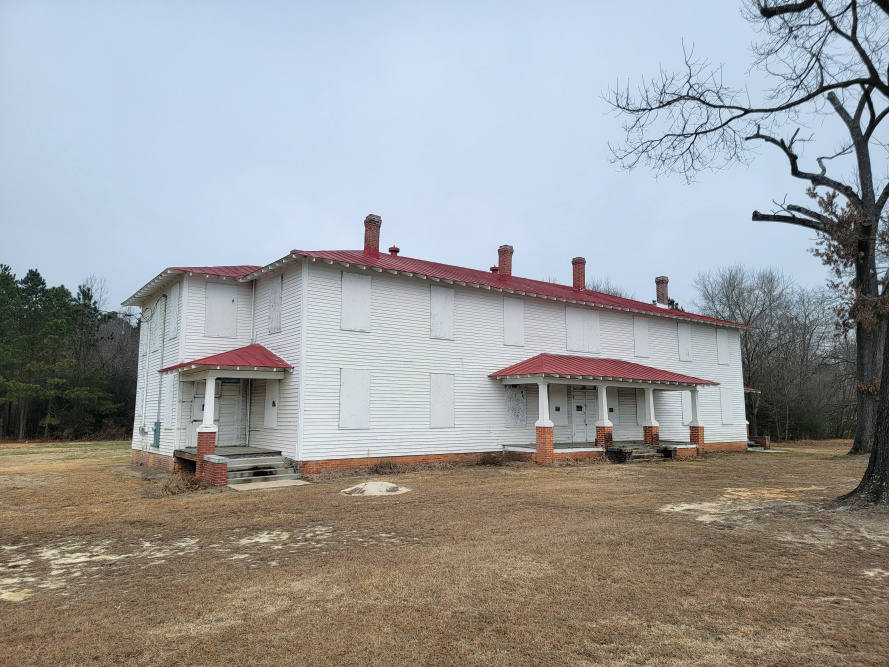
They’ve repaired the porch and roof, but fundraising is a constant challenge. Their annual fundraiser, the Red Oak Classic tractor and car show, takes place the first Friday and Saturday of September each year, but they gladly take donations at any time. If you’re interested in helping, visit their website at roahps.org/donate.
“We’ve made progress, but there’s still a lot to do,” Moore says. “It’s important for people to realize places like this are part of our history. We need to save it. Not just for Red Oak, but as a reminder of how vital agriculture and education have been to North Carolina.”
For Moore, preserving the building isn’t just about bricks and mortar. It’s about honoring the legacy of rural communities that value hard work, education and farming.
“I hope people who read this will remember that if they have a project like this in their community, they should try to save it,” she says. “It’s part of who we are.”
Island Farm on Roanoke Island
Location: 1140 U.S. 64, Manteo
Hours: Varies by season. The annual pumpkin patch opens Oct. 4.
Phone: 252-473-6500
obcinc.org/island-farm
Red Oak Farm-Life School
Location: 5576 Red Oak Road, Red Oak
Hours: By appointment only; please call ahead. The Red Oak Classic fundraiser takes place Sept. 5-6.
Phone: 252-903-2536
roahps.org


Comments
Comments are closed.
This site is always filled with valuable information. Thank you!