North Carolina farmers need to diversify and be profitable. To support their work, the North Carolina Department of Agriculture and Consumer Services’ New and Emerging Crops Program funds research on new crops and value-added products. Already in this series, we’ve covered sesame and rice, and in this article, we focus on fiber hemp.
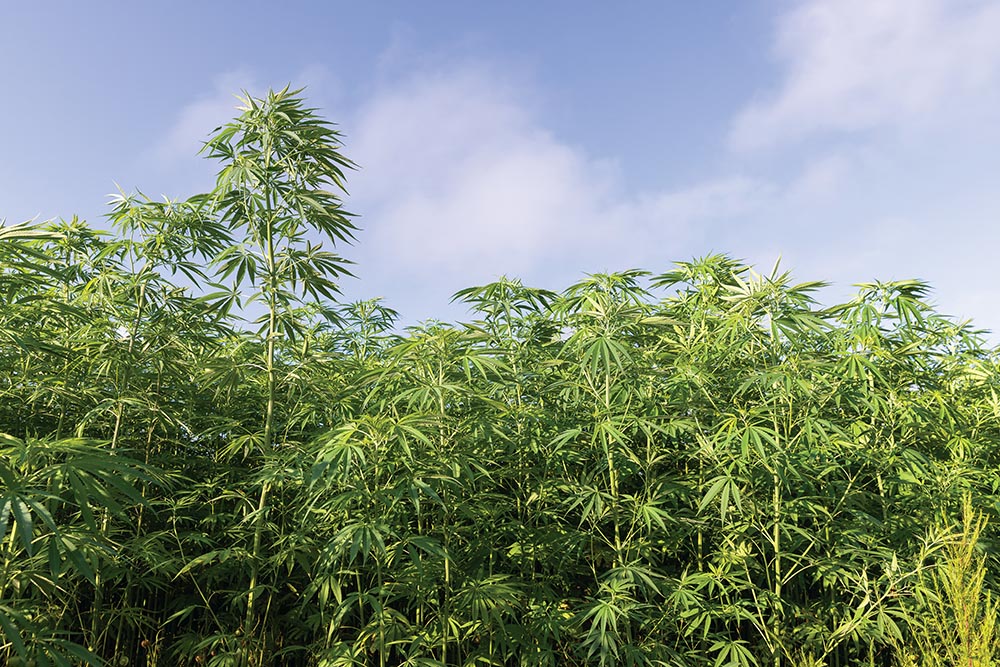
“Fiber hemp is grown similarly to a hay crop and fits well into traditional row cropping systems,” says David Suchoff. Suchoff is the alternative crops NC Extension specialist and associate professor at NC State University. “It’s used to produce textiles for the apparel industry, carpeting, upholstery and more. Since our state has a large textile industry and diverse agriculture, fiber hemp makes sense as an emerging crop.”
Facts & Stats
Farm Facts: Fiber Hemp
What is fiber hemp, and how does it contribute to North Carolina agriculture? Get answers to these questions and more.Riveting Research on Fiber Hemp
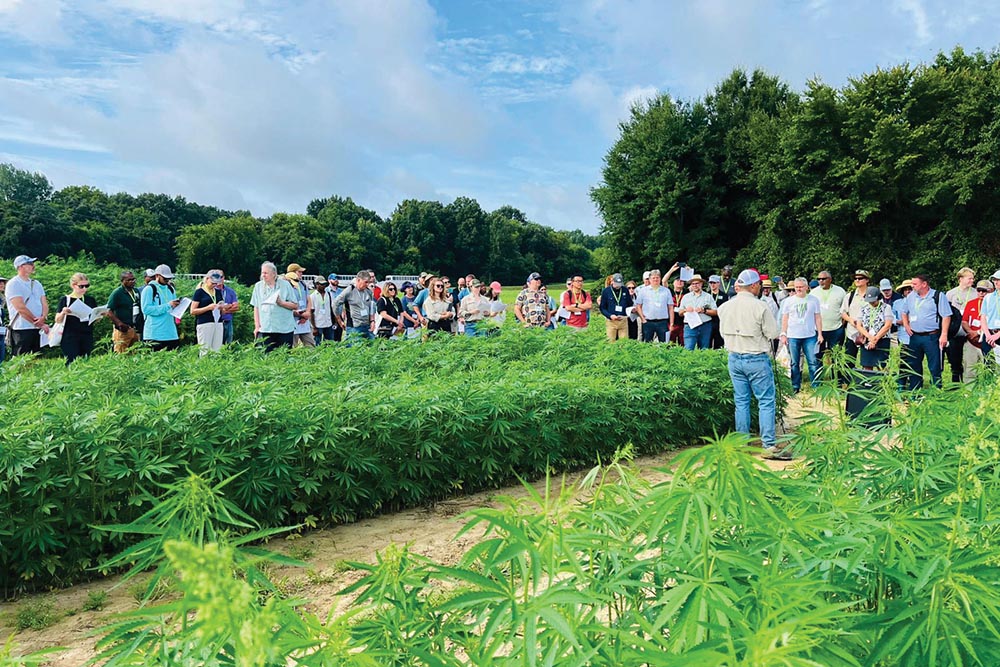
Suchoff leads fiber hemp research trials that have been working to establish solid production recommendations for growers and address challenges such as managing weeds.
“We’re looking at when the crop needs to be harvested, fertility needs and proper seedling density,” he says. “We’ve been working with the Wilson College of Textiles at NC State to take a holistic approach and determine how different cultural practices in the field might affect the end fabric.”

Commentary
Ag Research Helps N.C. Farmers Feed More People on Less Land
N.C. farmers and agriculture contribute $103.2 billion to our state’s economy, and we celebrate the hard work it took to get here.Easy to Implement
With relatively low input costs and similar equipment needs to row crops, such as corn and cotton, fiber hemp is a good choice for traditional commodity farmers. While the crop itself is the same plant that is used to produce CBD products, fiber hemp is processed very differently.
In fact, the plant is never allowed to flower before harvest begins.
“The stem is where the fibers are located,” Suchoff says. “The crop is harvested and left in the field to break down prior to baling. This process is called retting, and it’s very important for processing.”
To grow fiber hemp, farmers still need a license from the United States Department of Agriculture, despite the fact that the end product doesn’t contain THC.
Animals & Livestock
Ag Exports Contribute to North Carolina’s Economy
Agricultural exports contributed over $3.3 billion to the state’s economy at the end of 2023.“I’d say that’s one of the challenges to getting started,” Suchoff says. “Farmers still have to go through that process of licensure.”
Fiber Hemp Farming
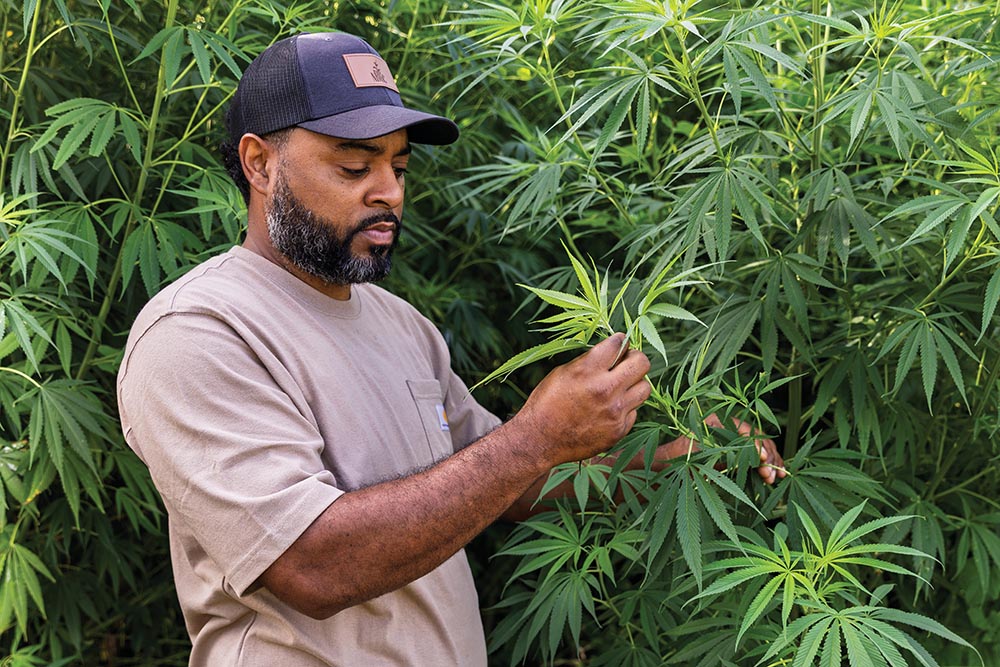
Patrick Brown understands the challenges and opportunities in fiber hemp production. On his fourth-generation family farm in Warren County, Brown traditionally produced row crops. Now, he also grows commodity crops, produce and fiber hemp.
“I wanted to focus on a crop that could be sold directly to consumers from our farm,” Brown says. “So, I began growing industrial hemp in 2015.”
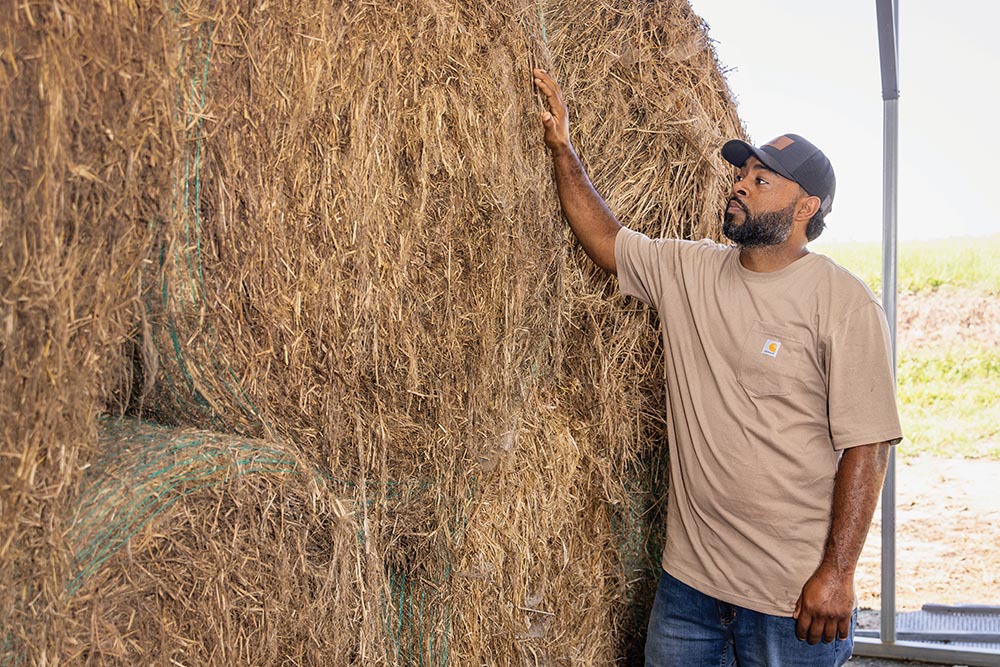
He integrated CBD from the hemp into products like oils, topical creams and more, and formed a business around them. Brown says he began learning more about fiber as an end product. Then, in 2019, he planted his first hemp fiber crop. He’s now in his sixth season, managing about 250 acres.
Brown partnered with Biophil Natural Fibers in Lumberton as a fiber hemp processor. He continues working to learn the crop’s needs through trial and error.

Crops & Forestry
Carolina Gold Rice Catches On in North Carolina’s Tidewater Region
As North Carolina farmers search for new crops and value-added products, Carolina Gold rice is reemerging in the state’s Tidewater region.“There are things that are out of your control, as with any crop,” he says. “But if you’ve identified the proper genetics, when to plant and making sure your soil is prepped at the beginning, you’ll set yourself up for success.”
The Right Fit
Kyle Smith of Sound Mind Farms in Sampson County also grows fiber hemp. He also grows traditional row crops and raises livestock, including cattle, turkeys and hogs.
“I’ve always been interested in growing hemp for fiber,” he says. “It fit into our operation and the equipment we already had for hay. I did a lot of research and found a reputable outlet to sell to. We’ve been growing the crop since 2023.”
Smith farms with his father and says they have about 250 acres of hemp on their 2,000-acre operation.
Crops & Forestry
New and Emerging Crops Program Studies North Carolina Sesame
The New and Emerging Crops Program helps fund research that identifies new crops and value-added products like North Carolina sesame.“We were looking for another crop to rotate in our lineup, and hemp has a lot of benefits,” Smith says. “It doesn’t require a lot of chemicals, and it actually helps build soil health. The hemp stalk traps heavy metals that can be in the ground, like zinc and arsenic.”
He adds that it’s a fast-growing crop that produces various end products for different users, such as hemp hurd (the stalk’s woody, inner core) for animal bedding or high-end fiber for clothing companies.
Hopeful for Hemp
Both Smith and Brown as well as Suchoff see a bright future for fiber hemp in North Carolina.
“We need to keep working to make sure we’re producing high-quality fiber that the industry will want,” Suchoff says. “Just as we are known for high-quality tobacco production, I would love for North Carolina to have that same reputation for fiber hemp.”
To learn more about fiber hemp and other emerging agriculture research, visit hemp.ces.ncsu.edu.