As North Carolina farmers search for new crops and value-added products to boost their income and sustainability, a legacy crop – Carolina Gold rice – is reemerging in the state’s coastal Tidewater region.
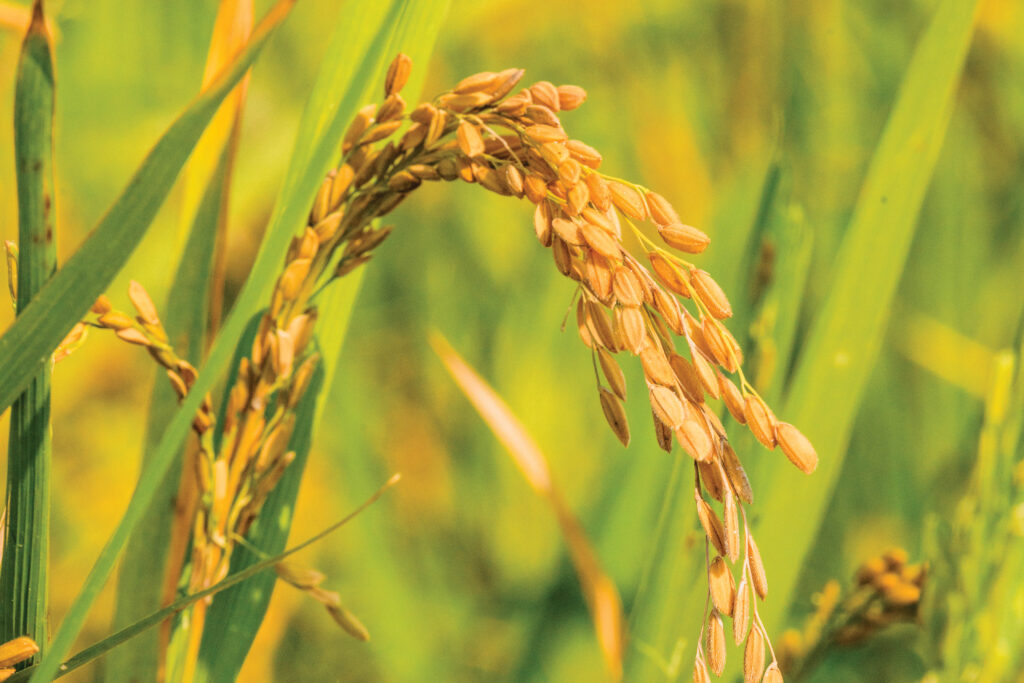
A medium grain rice with a nutty, rich flavor, Carolina Gold rice has caught the attention of food lovers all over the country, and increasingly around the world, says Tommy Wheeler. He co-founded Tidewater Grain Co., based in Pamlico County, at the heart of the Tidewater region.
“We like to say, ‘It tastes like rice is supposed to taste,’” he says.

Wheeler and Al Spruill planted their first crop of Carolina Gold rice in 2019, and in 2022 the company completed a mill to process and package it. Today, Tidewater Grain sells rice and other products throughout the U.S. in specialty food stores and directly to consumers who order online. Chefs around the country are also adding Carolina Gold to their menus as they seek more heirloom ingredients, Wheeler says.
“We’re all trying to be more conscious of what we eat,” Wheeler says. “An heirloom rice, like Carolina Gold, that naturally tastes good with no additives, just makes a lot of sense.”
Increasingly, international customers are contacting Tidewater Grain to order the North Carolina-grown rice, Wheeler says. “We were named the North Carolina rural exporter for 2023, which is really quite an honor.”
A Tidewater Tradition
Carolina Gold rice is not new to the Tidewater region. In fact, Carolina Gold was introduced to the region long before the Revolutionary War and was a leading variety into the mid-1800s, says Angela Post, a small grains Extension specialist at North Carolina State University.

Animals & Livestock
15 Common Misconceptions About Agriculture
Farmers in the coastal regions of North Carolina, South Carolina and Georgia once raised an estimated 100,000 acres of Carolina Gold, making the Tidewater region the nation’s top rice producer. However, commercial rice production eventually migrated away to the Mississippi Delta region, and into Texas and California, Post says.
“Carolina Gold rice was mostly lost to history,” she says.
Getting Their Ducks in a Row
Eventually rice researchers at the U.S. Department of Agriculture revived Carolina Gold by propagating seeds of the heirloom crop. Then, entrepreneurs in the Tidewater region, including Tidewater Grain Co., began to grow the variety to meet an increasing consumer demand for all kinds of heirloom foods.
Wheeler says he and Spruill were on the lookout for a crop that would complement their favorite pastime – duck hunting. “We really got into the rice business as a way to hunt more ducks,” he jokes.

Growing rice turned out to mesh perfectly with duck hunting, Wheeler says. That’s partly because rice plants regenerate after harvest and produce a small amount of grain. That extra crop, called a ratoon, is perfect for attracting and nurturing waterfowl, he says.
And Carolina Gold turned out to be the ideal variety of rice for Tidewater Grain Co., Wheeler says. “As a higher-value specialty crop, it could fetch a higher price at market than other crops, such as corn or commodity rice,” he says.
Growing Carolina Gold Rice
Another similarity with ducks: growing Carolina Gold rice requires a lot of water.
The crop is planted in early spring. After the young plants have sprouted and begin to grow, farmers flood their rice fields with freshwater using a system of dikes and levees. As the rice plants progress, farmers gradually add more water, keeping the water surface level just inches below the tops of the plants.

Commentary
A Stabilizing Force for North Carolina
The flooding keeps the rice crop nourished and helps control weeds, Post says. The deepening water, she adds, provides support for the lanky Carolina Gold rice plants, which typically grow shoulder-high, much taller than other rice varieties.
“Keeping the Carolina Gold plants standing until they are ready for harvest is often a real challenge for farmers, especially in seasons with hurricanes,” Post says. “If the rice plant lies down, it’s very hard to pick up and harvest.”

Rice-ing to the Occasion
The strong demand for Carolina Gold rice is sparking more interest from farmers who are looking for alternative crops with higher income potential, Post says.
“There is clearly room in the market for more heirloom rice production,” she says.
Along with their own harvest, Tidewater Grain Co. processes Carolina Gold rice raised under contract by several other area farmers, and Wheeler says they are looking to onboard additional growers over time.
Tidewater works closely with the contract growers to ensure the Carolina Gold rice they buy is raised under the company’s strict specifications, Wheeler says.
“It’s important for us to have a very consistent product,” he says.
To learn more about Tidewater Grain Co. and Carolina Gold rice, as well as purchase rice, gift baskets and clothing, visit tidewatergrain.com.