
North Carolina delivers the essential components for a thriving forestry industry: access to infrastructure, qualified local labor and some of the most productive forests in the world.
Collectively, the Southeastern U.S. provides 20% of the wood used worldwide, according to the Food and Agriculture Organization of the United Nations.
The Future of Forestry
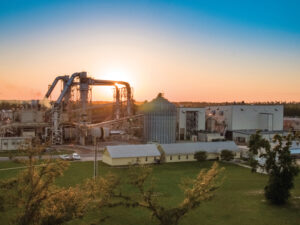
Operating across the Southeast, Enviva is the world’s largest producer of industrial wood pellets, a renewable biomass source for heating and powering homes and industry. The company built its first wood pellet plant in Hertford County 10 years ago and since then has invested $675 million in North Carolina, where it operates four wood pellet plants, a corporate office and a deep-water export terminal at the Port of Wilmington.
Enviva ships its wood pellets to global power and heat generators across the United Kingdom, Europe and Japan. These long-term contracts with buyers directly and indirectly support more than 1,800 company jobs across North Carolina and contribute to continual forest growth throughout the Southeast.
“The North Carolina forest industry has a bright future,” says John Hatcher, executive director of the North Carolina Forestry Association (NCFA). “When you look at the proximity to market, infrastructure, good growing climate, soils and embracing technology so we can manage land to be sustainable, we have some of the most productive forest in the U.S. in North Carolina.”
See more: What are the Challenges and Benefits of Forestry Farming?
Delivering on Green Energy Demand
Biomass from sources like wood pellets represents Europe’s largest source of renewable energy. In fact, bioenergy constitutes about 60% of total energy consumption for heating more than 50 million European households, according to the European Commission’s Knowledge Centre for Bioeconomy.
Enviva sustainably sources its wood from local forests, many of them privately owned by families. The company provides a global market for waste and low-value wood, such as twisted trees, treetops and limbs not suitable for furniture and quality lumber.
Hatcher says wood pellets are among a wide array of forest products that affect the lives of people domestically and abroad. Consumers use more than 5,500 forest products every day, from toilet paper and diapers to packaging and office paper. NCFA’s member companies have found ways to create value from North Carolina’s forests for generations.
“I think the public is missing out on our sustainability story,” Hatcher says. “We have mills that procure wood from a 50-mile radius and have done that for the last 100 years. Responsible forest management, which is the job of foresters and our members, creates sustainable forests.”
Hatcher finds that some people have negative associations with clear-cut areas of harvested trees. In fact, that clear-cut area quickly turns into a new crop of managed trees with benefits to North Carolina, the U.S. and the world.
“The NCFA and our 4,000 members work hard every day to align with our mission to ensure healthy, productive and sustainable forests,” Hatcher says.
See more: Environmentalism Branches Out
Renewable & Sustainable
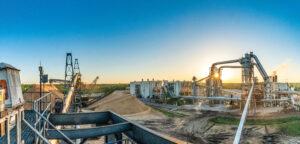
Enviva’s goal is to grow more trees and displace coal, all the while combating climate change. The company owns and operates 10 plants with a combined production capacity of 6.2 million metric tons of wood pellets per year, which are produced in North Carolina, Virginia, South Carolina, Georgia, Florida and Mississippi. Within the state, Enviva produces pellets in Hertford, Northampton, Richmond and Sampson counties. The manufacturer exports from its own marine terminals in Virginia and North Carolina and from third-party terminals in Georgia, Alabama and Florida.
“Like many startups, we did a lot of different things we thought we would be good at. Ultimately, we converged around a few things that we were actually good at,” says John Keppler, chairman, CEO and a co-founder of Enviva. “One was helping large-scale energy producers displace coal with a new, reliable, dispatchable fuel – biomass. As a result, we were able to manufacture a renewable, sustainable product that is a direct drop-in substitute for coal.”
See more: Well-Crafted Fun in Hickory
The Future of Forestry
While third-party organizations are involved in validating the company’s sustainability practices, Enviva also developed and launched a data system, Track & Trace®, that records its forestry and supply chain activities on a tract-by-tract basis. This allows Enviva to trace every ton of wood back to its origin in the forest or sawmill.
“We view ourselves as a critical supply chain partner to major power generators seeking to improve the environmental profile of energy generation,” Keppler says. “As the industry continues to mature, we’re proud to be able to help set the standard for safety, sustainability, quality, efficiency and reliability while making a positive contribution towards climate change mitigation.”
– Joanie Stiers


Comments
Comments are closed.

While your article points to the economic benefits of cutting down “unusable” trees to make wood pellets, new tree growth is far less capable of removing carbon dioxide from air than mature trees are. Meanwhile, burning pellets has been shown to produce just as much airborn particulate matter as does coal, and it takes massive expenditures of fossil fuel to transport them to Europe.
Also, Enviva plants have been situated in economically depressed areas populated mainly by minorities who are unlikely to bite the hand that feeds. Please read this article detailing the sleepless nights and ever-present dust endured by families who had lived for generations where homes are now worth even less because of that: https://www.cnn.com/interactive/2021/07/us/american-south-biomass-energy-invs/
While Enviva subsequently addressed air quality concerns by stating it meets current standards, which must be pretty low judging by the layer of ash in the article’s photos, it was mute on the issue of noise pollution.
Your magazine’s depiction of this industry as being clean and renewable does not accurately depict its full environmental consequences. It is not all bad, but neither is it the positive impact on climate change that we urgently need.