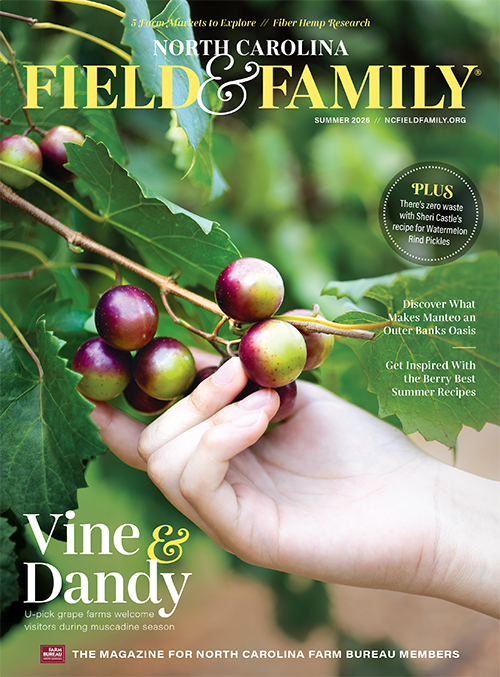
Summertime is here in North Carolina, and I’m excited for you to read the summer edition of North Carolina Field & Family! In this issue, we introduce you to growers of our Sandhills’ sweet peaches (I hear it’s a great crop this year!) and we cover a topic farmers and home gardeners alike might be dealing with this time of year – pests.
One of the things I like most about writing this commentary each quarter is the opportunity to highlight agriculture, which is the foundation of Farm Bureau, and to update you about what’s on the minds of North Carolina farmers. This spring, I traveled from the mountains to the coast meeting with farmers to discuss the issues they are facing. While I typically try to keep these commentaries light, a serious issue weighs heavily on them, and farmer-after-farmer raised this issue – farmland loss and preservation.
North Carolina is the fifth-fastest growing state in the nation, and those of us born here welcome the newcomers moving here to live and work. However, we must fi nd a way to accommodate them without sacrificing our farmland. Once those acres are taken out of production and paved over to build roads and houses, there’s no getting that farmland back. Agriculture is our state’s No. 1 economic driver, and it cannot continue to thrive and support our economy without its most precious resource, land.
See more: North Carolina’s Agricultural Diversity Shines This Season
Many farmers are under great pressure to sell their land to developers who are willing to pay top dollar. Some farmers just don’t have heirs who want to come back to the farm, but many others have family or even farming neighbors who would love to continue farming the land after they retire if only they could aff ord it. However, they simply can’t compete with what a developer can off er. These cases emphasize the importance of farm succession planning as a way to prevent farmland loss.
Farmland preservation is a complex issue, and we at Farm Bureau believe wholeheartedly in private property rights. But while it’s farmers’ land that is on the table, this is an issue in which we all have a critical stake. It affects everyone who appreciates our safe, abundant, local food supply and who cares about our state’s economy.
We are encouraged to hear of many wonderful initiatives underway bringing county governments, farmers and Farm Bureau together to seek solutions and preserve farmland. This is just the beginning of the necessary conversations we must have about how our farms and development can thrive and coexist for North Carolina’s future.
– North Carolina Farm Bureau President Shawn Harding