
The North Carolina Wildlife Resources Commission’s Wildlife Diversity Program works toward conservation of nongame — meaning they are not hunted — and endangered species. Pictured are just a few examples of the species the program tracks. In addition to research, commission biologists also work with landowners who are interested in implementing conservation measures on their property. The Wildlife Conservation Land Program allows landowners, who have owned their property for at least five years and want to manage for protected wildlife species or priority wildlife habitats, to apply for a reduced property tax assessment.

Spotfin chub is a federal and state listed threatened species found in the Little Tennessee River basin of Western North Carolina.

Left: Carolina gopher frog is a state threatened species. Their habitat includes dry longleaf pine, mesic forests, wet pine savannas, and small wetland communities in the Mid-Atlantic Coastal Plain ecoregion. Right: Common mudpuppy is a state special concern species and they are found in coolwater riverine communities in the Little Tennessee, French Broad, and New River basins. Photo Credit: T.R. Russ, N.C. Wildlife Resources Commission.

Left: Scarlet kingsnake is a wildlife action plan priority species found under rotting logs primarily in the Mid-Atlantic Coastal Plain and infrequently in the Piedmont ecoregion. The scarlet kingsnake is a nonvenomous snake that has a similar color pattern to the venomous coral snake. It can be distinguished by its red and yellow rings separated by black rings and reddish nose; however, it is recommended you not pick up any snake unless you are an expert in snake identification. Right: Carolina northern flying squirrels are a federal listed endangered species. Their habitat is restricted to relatively small areas of high elevation spruce-fir forest in the Southern Blue Ridge ecoregion.
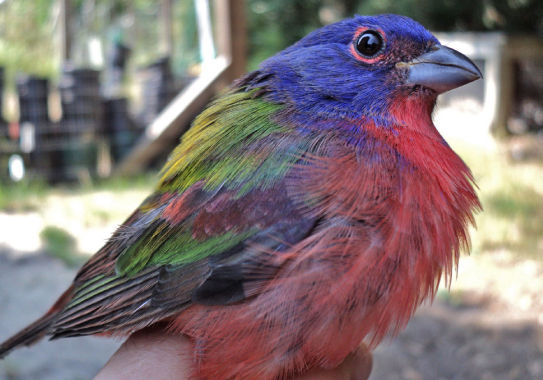
Eastern painted bunting is a Wildlife Action Plan priority species that breeds in maritime forest/shrub habitats along North Carolina’s coast.
You Might Also Like
Comments
Comments are closed.
this was an amazing article it also helped to know some things i didn’t know about