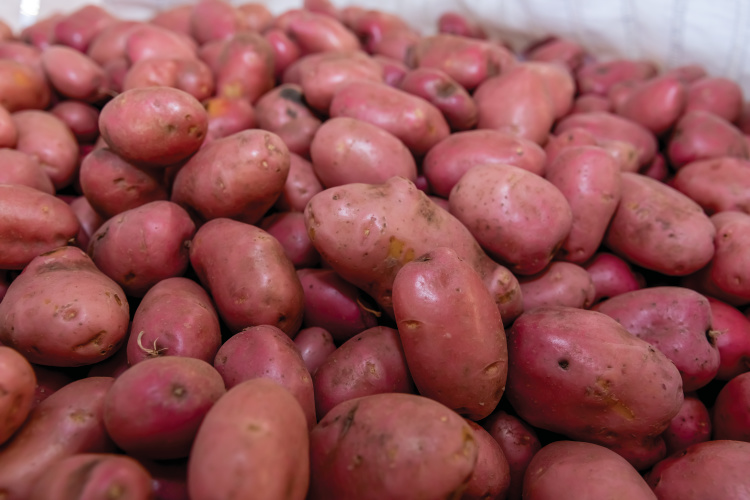
Mashed. Baked. Fried. Boiled. Bryant Jennings loves good, fresh North Carolina potatoes, and in his family, it’s always on the menu. Luckily, he has never had to look far to find one – or 1,000, for that matter.
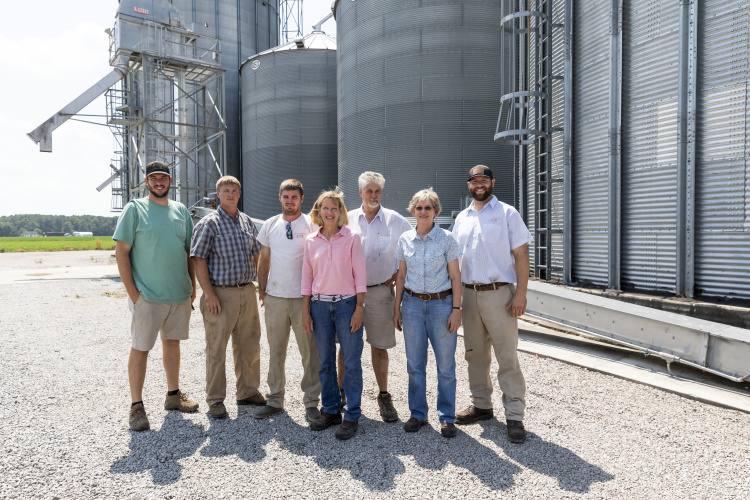
That’s because Jennings comes from a long line of North Carolina potato farmers. He is part of the eighth generation to operate John E. Ferebee Farming, Inc., a century farm in Camden in the northeast part of the state. Much of what he knows about the business came from the seventh generation, which includes his mother, Susan, and his aunt, Martha Ferebee, who learned it from their father, John.
See more: 10 Fun Facts About North Carolina Potatoes
“As long as I can remember, I’ve seen my family work hard and take pride in producing high-quality potatoes,” Jennings says. His brothers, Austin and Scott, and cousin, Ethan Meiggs, continue the Ferebee farm tradition, along with his aunt, his mother and his father, Jeff, who remain actively involved in the operations.
While automation techniques and advances in agricultural practices certainly have changed over the life of the century-old operation, the basics of growing potatoes remain the same, Jennings explains.
Strong North Carolina Potato Roots
It starts with the right soil, and North Carolina has it. In Camden and several other northern coastal counties, that soil is “loamy,” with a balance of sand, silt and clay that creates a nutrient-rich environment perfect for potatoes. Plus, that area of the state has the temperate climate, ample rainfall and cool growing conditions needed for this popular crop.
At Ferebee Farming, the planting of red, white and gold potatoes begins on about 400 acres every February.
“We begin by slicing tubers into 2- to 3-ounce seed pieces and placing them in rows in the field,” Jennings says. After about 30 days, the leaves of the potato plant emerge aboveground, while underground the potatoes themselves begin to form.
“As long as I can remember, I’ve seen my family work hard and take pride in producing high-quality potatoes.”
– Bryant Jennings, potato farmer
For the next three months, Jennings spends his time scouting for disease and treating the plants when needed to keep the crop healthy. Harvest begins in mid-June and continues until the end of July; however, because Ferebee Farming grows for the fresh market rather than the potato chip market, there is an extra step needed prior to harvesting.
See more: Super Sweetpotato Facts
“Two weeks before harvesting, we complete vine desiccation, which essentially means killing the vegetative growth so that the crop dries down more quickly and evenly,” says Jennings, who earned his bachelor’s degree in ag extension from North Carolina State University. “It keeps the potato from getting too big and sets the skin so that we have a product that is both safely produced and aesthetically pleasing when it is on the shelf for the consumer.”
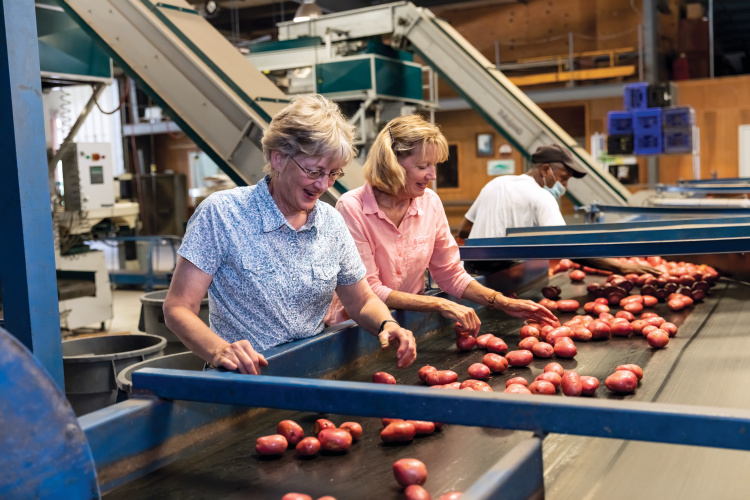
After the harvesting machine digs the potatoes, they are taken to a packing shed at the farm, washed, sized, graded and then loaded onto trucks to be delivered to retailers across the region.
Chipping Is No Small Potatoes
Fresh-market potatoes, like those grown by Ferebee Farming, represent 25% of the crop grown in North Carolina. The other 75% are grown for the potato chip market.
Black Gold Farms, which has agriculture operations across the country, runs two North Carolina chip potato farms – one in Columbia and a second in Camden.
See more: How North Carolina Peanuts Go From Field to Market
“For chip potatoes, we harvest them green,” says Chris Hopkins, director of commodities for Black Gold Farms. “We don’t need to kill the vines because we don’t need to set the skin or worry about storing or cooling down the potatoes to avoid rot.”
That’s because the time from harvest to the bag is less than two days, Hopkins explains. “Potatoes that we harvest early in the morning on these two farms can be at a chip plant later that day and in a chip bag the next day.”
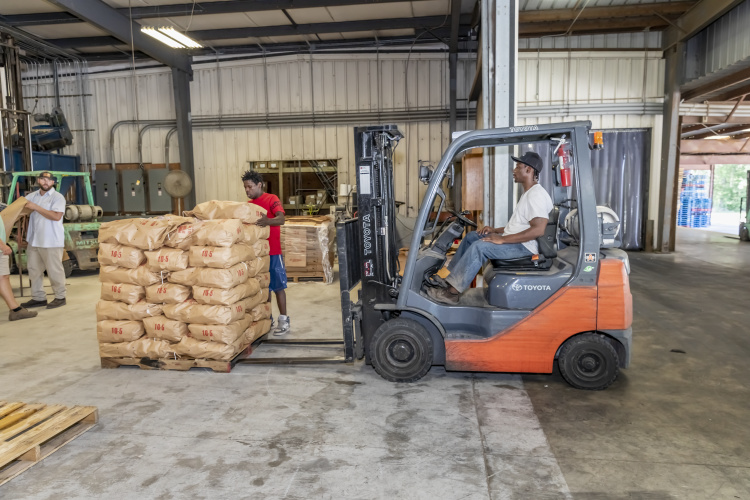
Between the two locations, Black Gold grows nearly 3,000 acres of potatoes, with each acre producing 26,000 pounds of the crop. It takes about 4 pounds of potatoes to make a 1-pound bag of chips. Obviously, the chipping industry is no small potatoes.
See more: International Trade Revolutionizes North Carolina’s Sweet Potato Industry
Hopkins explains that when the Black Gold potatoes arrive at a chipping plant, they are processed within 24 to 48 hours. They are then washed, peeled and dropped into spinning blades, which slice them thinly into chips. A second wash removes the starch that is released when the potatoes are sliced. Then they are fried, dried, seasoned and bagged. The whole process can take less than 30 minutes, depending on the thickness of the slices and whether they are kettle-cooked.
“With the early June harvest we have in North Carolina, it’s just the right timing to meet some of the biggest chip demand the country has,” Hopkins says. “Everyone wants potato chips for the Fourth of July.”
– Cathy Lockman