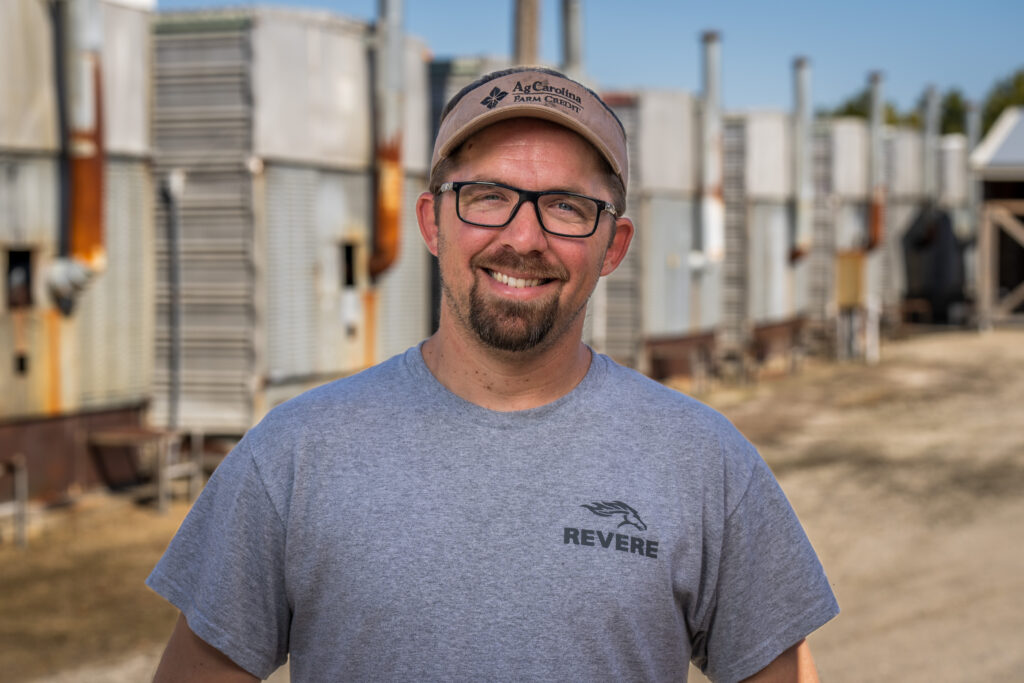
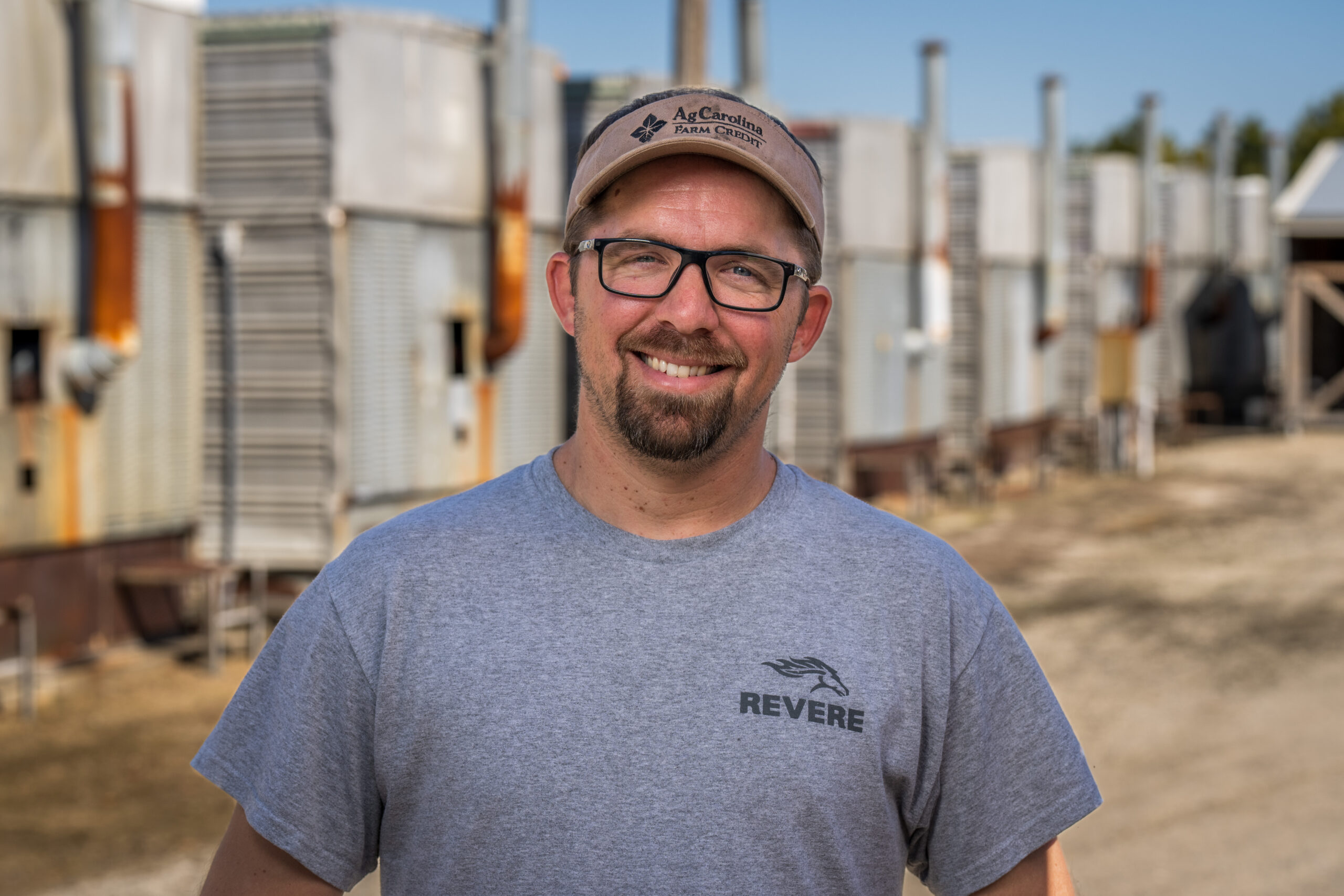
We asked Brent Herring, a crop farmer in Lenoir County, how he prepared his farm this summer differently after last year’s drought.
To prepare for drought, one thing we always do is choose crop varieties that show consistent yields across multiple years and growing conditions. The drought last year really showed us the benefit of cover crops, so we put more acres under cover crop this year. We use annual rye.
Last year, we noticed that we had a lot more soil moisture where we had planted cover crops, and those fields yielded better. Cover crops keep the ground covered and shaded, preventing the sun from burning off moisture throughout winter and early spring. Cover crops also help with erosion by holding water and keeping nutrients from running off. The roots from the cover crop also make it easier for the cash crop to root because they just follow the same root pattern.

After the drought, we also looked into investing in irrigation equipment, but it is just too expensive for us to commit to with commodity prices being where they are.
About the Farmer: Brent Herring’s family runs Herring Farms in Lenoir County, growing tobacco, corn, peanuts and soybeans. He also serves on Lenoir County Farm Bureau’s YF&R Committee.