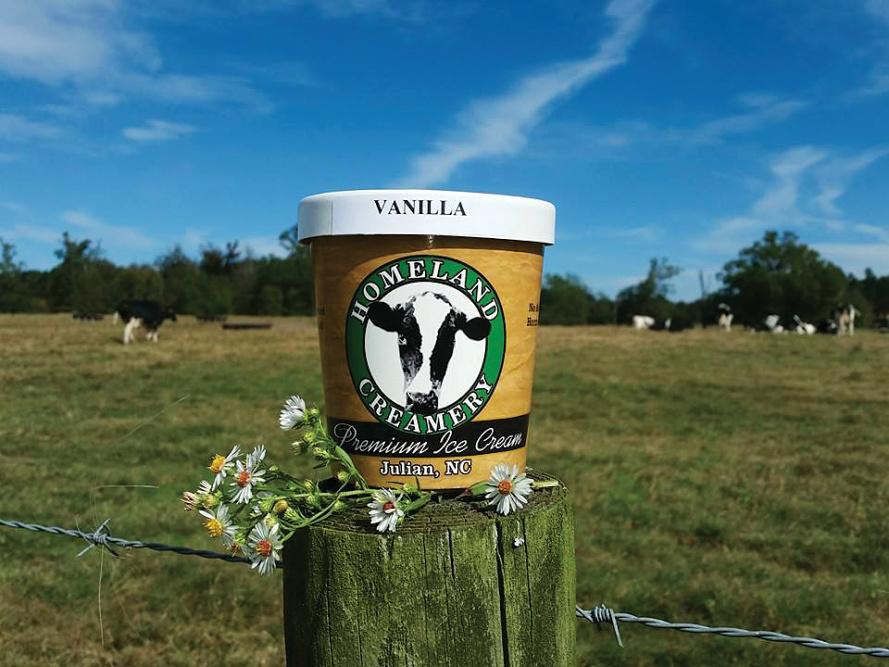
Millions of people in the U.S. dream of eating peanuts or dairy without having an allergic reaction or stomach problems because of dangerous allergens. Researchers and dairy farmers across North Carolina are trying to make those dreams a reality.

Allergens vs. Intolerance
While a food allergy affects the immune system and can cause life-threatening symptoms, food intolerances may impact more people but affect only the digestive system. Doctors can perform tests to distinguish between them, but intolerances can influence a person’s quality of life the same as allergies.
One offender is dairy – specifically its lactose, or milk sugar. Experts says lactose intolerance affects as many as 30 million to 50 million Americans. Many people who report lactose intolerance, however, may have self-diagnosed their condition.
“Lots of people who haven’t been tested but who know milk upsets their stomachs may not actually have lactose intolerance. Instead, they may have an intolerance to a specific casein protein,” says Olivia Miller, co-owner of Lincolnton’s Riverbend Creamery along with her brother, James, and parents, Corey and Bridgette Lutz.

Dairy Delights
Riverbend Creamery has a herd of more than 200 Jersey cows, and all have been bred to produce the A2/A2 beta casein protein, which tends to be easier to digest than the other casein protein classification, A1/A2.
The American Jersey Cattle Association performs tests to determine which type each cow’s milk produces. Historically, cows with A1 milk have been sold to other farmers.
“The Lutz name is associated here with Jersey cattle since we’ve been raising them for over 100 years, and in the last six, we’ve bred them to be an all A2/A2 herd,” Miller says. “Lots of our customers tell us they didn’t think they could drink cow’s milk, but they say they can drink ours without issues.”
See more: N.C. Dairy Farmers Milk It for All It’s Worth
That goes for people of all ages. Miller says one customer who hadn’t drunk milk in over 13 years now eats cereal daily. Children, especially, need nutrition that milk provides, she says.
“Plant-based milks don’t have the same fat and protein content that growing bodies need, and fat is essential for proper brain development,” she says.
Although the A2 protein tends to be more digestible, it’s still being researched, so Miller advises anyone to use caution if they decide to try A2 milk.

Peanuts, Please
The number of Americans with peanut allergies has doubled in the past decade, but research at North Carolina Agricultural & Technical State University (N.C. A&T) aims to help the 6 million to 7 million affected.
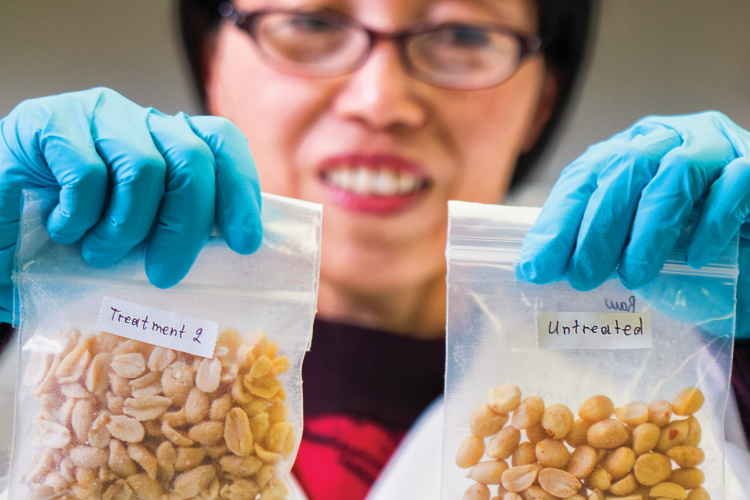
Dr. Jianmei Yu, a research associate professor in food science at N.C. A&T, has been leading work for several years to reduce allergens in peanuts. Her research involves exposing peanuts to enzymatic treatment.
“What we found is that the enzyme we used in relatively high concentration can quickly break down allergenic proteins, but it generates small peptides – fragments of proteins,” Yu says. “Most of those peptides are not allergenic, but a few of them are, so it reduced the allergenicity but didn’t eliminate it.”
See more: Peanut Allergy Protection
Her research team tested several food-grade enzymes. Some originated from the animal digestive system, and others originated from fruits and bacteria. The enzyme found most effective was one that originated from a type of bacteria.
The tests – as research often tends to do – yielded some surprising findings.
“The treatment affected the flavor composition,” Yu says. “The treated peanuts had a slightly weaker flavor than untreated peanuts, and a chemical analysis found that the sugar content was reduced because the sucrose that occurs naturally in peanuts dissolved in the enzyme solution.”
Sucrose is important for flavor development. It normally reacts with proteins during roasting for fuller, more complex flavor compounds.
Allergens Research
“Flavor is important to consumers,” Yu says. “The peanuts may have reduced allergens, but if they don’t taste like people expect peanuts to taste, they won’t be satisfying.”
She says she will continue trying to improve peanut flavor by optimizing the enzyme treatment conditions.
The enzymatic treatment also increased antioxidant activity that ultimately improved storage stability and prolonged shelf life.
And preliminary data showed that the enzymatic treatment may provide the legumes with anti-hypertensive properties. Yu received a U.S. Department of Agriculture grant to collaborate with the University of North Carolina at Chapel Hill to study that potential further.
See more: How North Carolina Peanuts Go From Field to Market
“Peanut is one of the most dangerous food allergens because it’s difficult to avoid,” Yu says. “It’s an ingredient in so many foods, and other foods are processed on the same equipment. It can even become airborne because of the powdery nature of peanut flour.”
Her research means that for the millions affected, depending on the severity of their allergy, possible safe consumption of peanuts is in the not-too-distant future.
– Tracey Hackett
Riverbend Creamery Lincolnton For more information, to schedule a farm tour to meet the herd and watch the milking, to try one of the creamery’s 22 ice cream flavors, or to find out where Riverbend Creamery products are sold, visit riverbendcreamery.com or follow them on Facebook and Instagram @riverbendcreamery. N.C. A&T Greensboro Learn more about the university by visiting ncat.edu. To see more about the College of Agriculture and Environmental Science and Yu’s program, visit its website at ncat.edu/caes/index.php. More Info