Pigs make bacon, soybeans make livestock feed and most produce is sold fresh or frozen. While this is true, it’s just the beginning of the ways agricultural products are used. Read on to discover some of the more unusual and unexpected uses for the state’s top agricultural commodities, plus innovations for common products.
Everything But the Oink
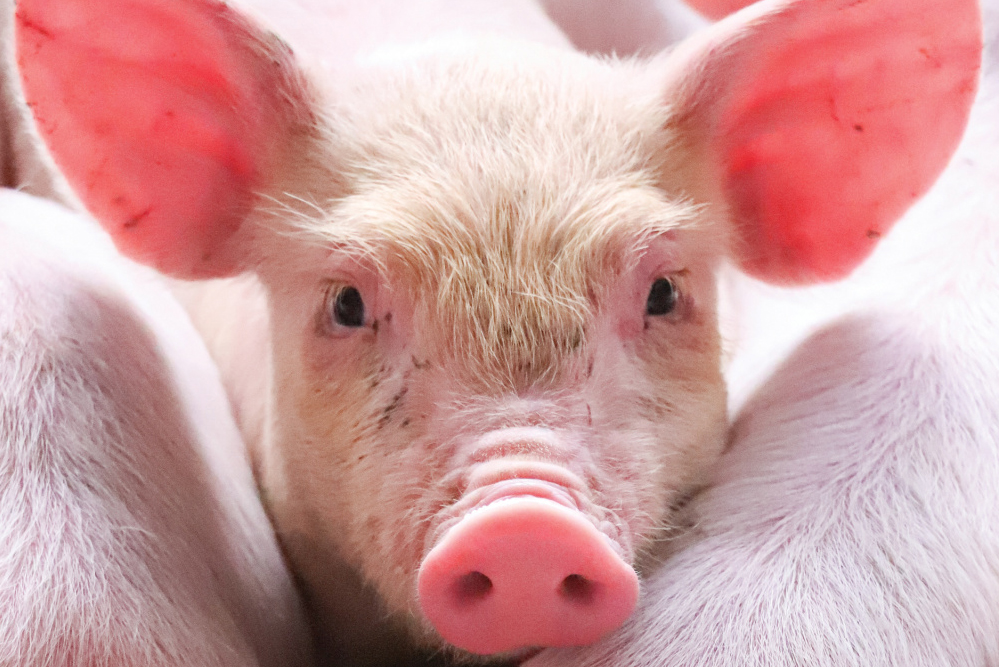
“One of the great things about pork is that very little goes to waste,” says Robert Brown, with the North Carolina Pork Council. “Nearly every part has a purpose.”
North Carolina ranks No. 3 in U.S. pork production, and along with making bacon and pork chops, pork-derived products are everywhere. From the glycerin found in toothpaste, lotion, soap and shampoo, to gelatin, which is used to make medicine capsules, surgical sponges, marshmallows, Jell-O and gummy bears, pork products are involved.
Many might know that pig heart valves have been used in human heart surgery for more than 60 years, but did you know that pig fats and byproducts are also found in crayons, adhesives and candles?

Brown adds that few places in the country produce more pork than Eastern North Carolina, contributing more than $10 billion to the state economy annually.
“At the end of the day, a lot of these products start with family farmers across North Carolina who take pride in raising pigs the right way,” Brown says.
Carrots of a Different Color
While grocery shopping, you might read “no artificial dyes,” and ask, “Then what are they using?” One example is carrots. Food processors use carrots as a natural food dye to shift away from synthetic food dyes. Using natural colorants poses challenges, including the need for stable production of extracts and their short shelf life.
Although orange carrots are the most common carrot variety, white, purple, red, black and yellow carrots are also grown worldwide, with each color providing distinct bioactive compounds. Purple carrots are specifically used as a source of anthocyanins to replace the synthetic colorant Allura Red (FD&C Red No. 40) and certain blue and purple synthetic dyes. Researchers and industry leaders in North Carolina are actively working to position the state to capture a share of the expanding natural colorants market.
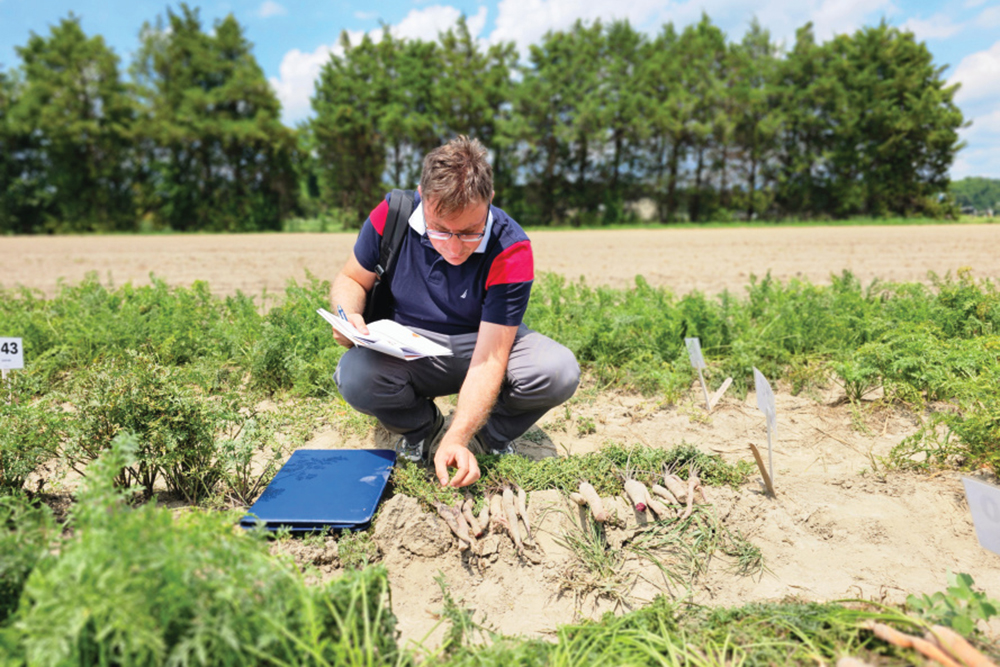
Massimo Iorizzo, Ph.D., an associate professor of plant genomics at North Carolina State University, was awarded a $637,000 grant in 2022 by the U.S. Department of Agriculture National Institute of Food and Agriculture (USDA-NIFA) to increase anthocyanin yield in purple carrots and improve anthocyanin stability and longevity in food products.
“The project aims at understanding which genes or parts of the DNA in carrots control the accumulation of the anthocyanin content and, in particular, the acylated anthocyanin,” Iorizzo explains.
Anthocyanins are widely studied because they are natural plant pigments that act as strong antioxidants and anti-inflammatory agents, protecting cells, reducing inflammation and boosting heart health by lowering blood pressure and cholesterol.
“We are identifying the genes in carrots responsible for higher anthocyanin levels,” Iorizzo says. “By testing the DNA from a leaf, essentially a DNA fingerprinting test, we can fast-track the selection of plants with the highest concentrations. This allows farmers to grow cultivars specifically tailored for the natural colorant industry.”
The team is also focused on quality. “We are studying the genes that produce ‘acylated anthocyanins,’ a form of anthocyanin that offers superior stability as natural colorants,” Iorizzo adds.
Ultimately, this research provides the innovative blueprint needed as global demand shifts from synthetic to natural dyes.

Rainbow Connection
GNT Group, a Dutch company behind the EXBERRY® product line, develops plant-based color solutions derived from fruits and vegetables for the global food and beverage industry. Purple carrots are one example of agricultural raw materials used to create red and purple shades in products such as beverages, confectionery, ice cream, yogurt and fruit snacks.
“These colors are created using physical processing methods that transform fruits and vegetables into concentrated color solutions that can be used across a wide range of food and beverage applications,” explains Alice Lee, technical marketing manager for GNT USA, which is based in Dallas, North Carolina.
“Many people may not realize this, because on ingredient labels, they appear simply as ‘vegetable juice (color)’ or ‘fruit and vegetable juice for color,’ helping create familiar colors using ingredients consumers recognize,” Lee says.

Beyond the Bean
In addition to food for humans and animals, soybeans have long been used to produce items ranging from shampoo and lotions to crayons and ink. (In fact, this magazine is printed with soy ink.) But possibly the best recent success for soybean use is SoyFoam TF-1122, a fluorine-free, biobased, biodegradable product engineered as a safe fire combatant.
“Traditional firefighting foams use per- and polyfluoroalkyl substances (PFAS), referred to as ‘forever chemicals,’” says Charles Hall, executive director of the North Carolina Soybean Producers Association. “These chemicals pose environmental and health risks because they are resistant to breaking down in the environment and are now directly linked to increased health issues, including cancer.”
Soybeans are composed of 20% oil and 80% meal, or the dry matter after the oil is expressed. The meal is predominantly used as a protein ingredient in animal feeds, with the oil seeing high demand for biodiesel and renewable diesel production, as well as for cooking and salad oil.
SoyFoam is created from the meal portion of soybeans and eliminates the environmental, health and safety concerns firefighters face.
Hall is proud of soybeans’ wide impact on a variety of products, which is made possible by the advocacy work and passion of commodity organizations.
“About 12% of the North Carolina crop is exported, while the rest goes to feeding the state’s swine and poultry animals,” Hall says. “Because of the amazing farmers growing soy (in rotation with other crops) in all 100 counties, their spirit of volunteerism and hardworking ethos keeps our commodity associations running.”